Tangalle & Hiriketiya Guide: Beaches, Surf & Yala Trips
Quiet beaches, Hiriketiya's surf bay and turtle nights at Rekawa, plus why Tangalle is one of the easiest bases for a Yala safari day.


Quick facts
- Best months
- Dec–Apr
- How long
- 3–5 nights
- Yala
- ~2 h, pickup around 3:30 am
- Closest park
- Udawalawe, ~1 h 30
- Rekawa turtles
- All year, busiest ~Apr–Jul
- Good for
- Quiet beaches, surf, turtles
On this page
Tangalle is what people mean when they say they want the south coast "before it got busy". The beaches are long and wide, the town is a working fishing port, and most places to stay are small guesthouses and villas set back among the palms. Half an hour west, Hiriketiya is the opposite in miniature: a tiny horseshoe bay with surf, cafés and a crowd to match.
Choose it if you want space more than nightlife; couples, slow travellers and surfers tend to fall for it fast. Just don't expect to swim straight off your doorstep, because much of this coast has strong currents.
For wildlife, Tangalle punches above its weight: it's one of the easiest safari bases in the south. Yala is about two hours away and Udawalawe about an hour and a half, so a morning safari still means a pre-dawn start, but you're back on the beach by early afternoon.
Tangalle vs Hiriketiya at a glance
- Tangalle: wide, empty beaches, sheltered coves at Goyambokka and Silent Beach, and a spread-out, unhurried feel. It's the closer base for Rekawa's turtles, but you'll rely on tuk-tuks.
- Hiriketiya: a small, sheltered bay near Dickwella with a beginner-friendly beach break and a reef for experts. Expect yoga, cafés and a younger crowd, and book early around Christmas and New Year.
Plenty of people stay in one and day-trip to the other. They're about 30 minutes apart by tuk-tuk.
Best beaches and things to do
Beaches
- Goyambokka and Silent Beach: two reef-sheltered coves just west of town, and the best swimming around. They're usually calm from December to April. Even so, watch the currents and keep an eye on children.
- Medaketiya and Marakolliya: the long beaches north-east of town. They're gorgeous for sunrise walks, but they face the full force of the sea, so admire rather than swim.
Temples, blowholes and birds
- Mulkirigala Rock Temple: about 20 km inland, a series of cave shrines on terraces climbing a 205-metre rock, with reclining Buddhas and Kandyan-era paintings. It's a steep climb on stone steps, so go early. Cover shoulders and knees, remove shoes and hats, and never pose with your back to a Buddha statue.
- Hummanaya Blowhole: near Kudawella, about 12 km west of Tangalle, where incoming waves force spray 25 to 30 metres into the air. It's most dramatic when the sea is rough.
- Wewurukannala Vihara: a temple near Dickwella with a giant seated Buddha. Dress as you would for any temple.
- Kalametiya Bird Sanctuary: about 24 km east, a lagoon and mangrove wetland with more than 150 bird species. Go early, when the birds are busiest and the heat is gentle.
Three easy days
- Coves and turtles. Swim at Goyambokka in the morning, hide from the midday heat, and head to Rekawa after dinner for the turtle watch.
- Temples and waves. Climb Mulkirigala early, stop at Hummanaya and Wewurukannala on the way west, and finish with a sunset surf or swim at Hiriketiya.
- Safari. An early pickup for Yala or Udawalawe, back by early afternoon for a long, lazy lunch and a nap you'll have earned.
Hiriketiya: the surf bay
Hiriketiya ("Hiri" to regulars) is a horseshoe of sand and palms near Dickwella. The bay has two waves: a mellow beach break in the middle that suits beginners and improvers, and a fast left-hand reef break in the eastern corner for experienced surfers only.
Waves arrive for most of the year. The smaller, friendlier days tend to come between December and February, which is also when the bay is busiest. You can rent boards from stalls on the sand, and several schools run lessons. By mid-morning the middle of the bay can be chaotic, so paddle out at sunrise if you want room.
Not a surfer? On small days the bay is a lovely place to swim and watch everyone else fall off, and there's yoga and good coffee within a few steps of the sand. Swimmers should keep away from the surfers in the middle of the bay and ask locally where it's calmest that day. Hiriketiya has grown fast, with bigger hotels now, and the old sleepy surf-village feel survives best in the early mornings.
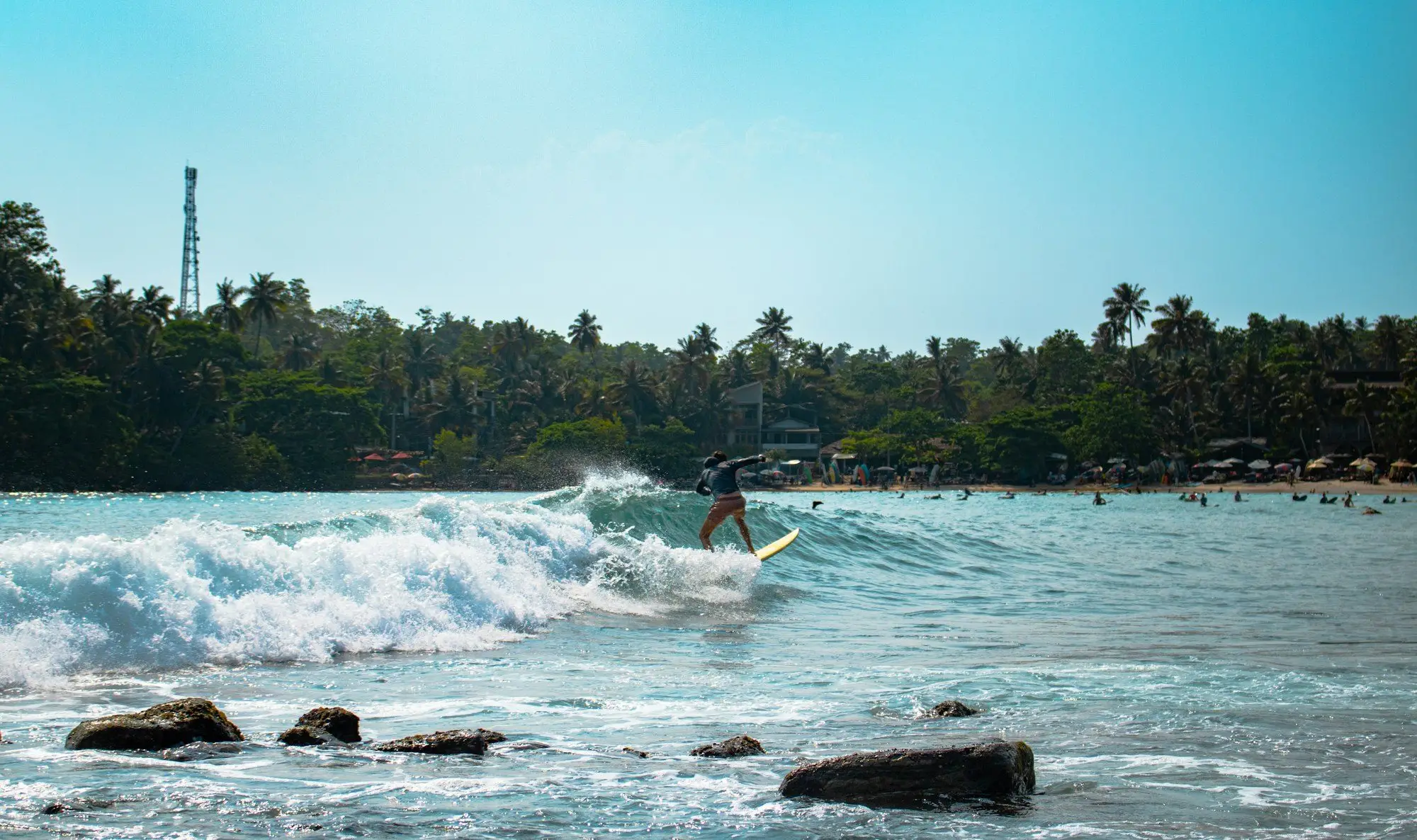
Catching a wave at Hiriketiya. Sunrise sessions have the friendliest line-ups.
Turtle watching at Rekawa
About 10 km east of Tangalle, Rekawa is one of Sri Lanka's most important turtle nesting beaches, and its nightly turtle watch is the ethical way to see them.
The turtle watch grew out of a conservation project that turned local egg collectors into nest protectors. Nests stay where the mother laid them, guarded on the beach, and visitor fees still help pay for the night patrols.
How it works:
- Arrive from 8 pm, before 9 at the latest, at the visitor centre near the beach. You wait in groups until a beach watcher radios in a turtle, which can take minutes or hours.
- No lights of your own. Only the guides use torches, with red light, and flash photography is banned. Wear dark clothes and leave valuables behind.
- Wait for the signal. You approach only once she has started laying and settles into a trance-like state. Stay quiet and keep your distance.
- Bring cash and patience. The fee is modest and paid at the centre, and the whole evening can take up to three hours.
Turtles nest all year, and the busiest months are usually around April to July, so check locally before you go. Outside the peak, nights without a turtle are more common, and no sighting is ever guaranteed. Green turtles are the species you're most likely to see, though loggerheads, olive ridleys, hawksbills and leatherbacks also nest on this coast.
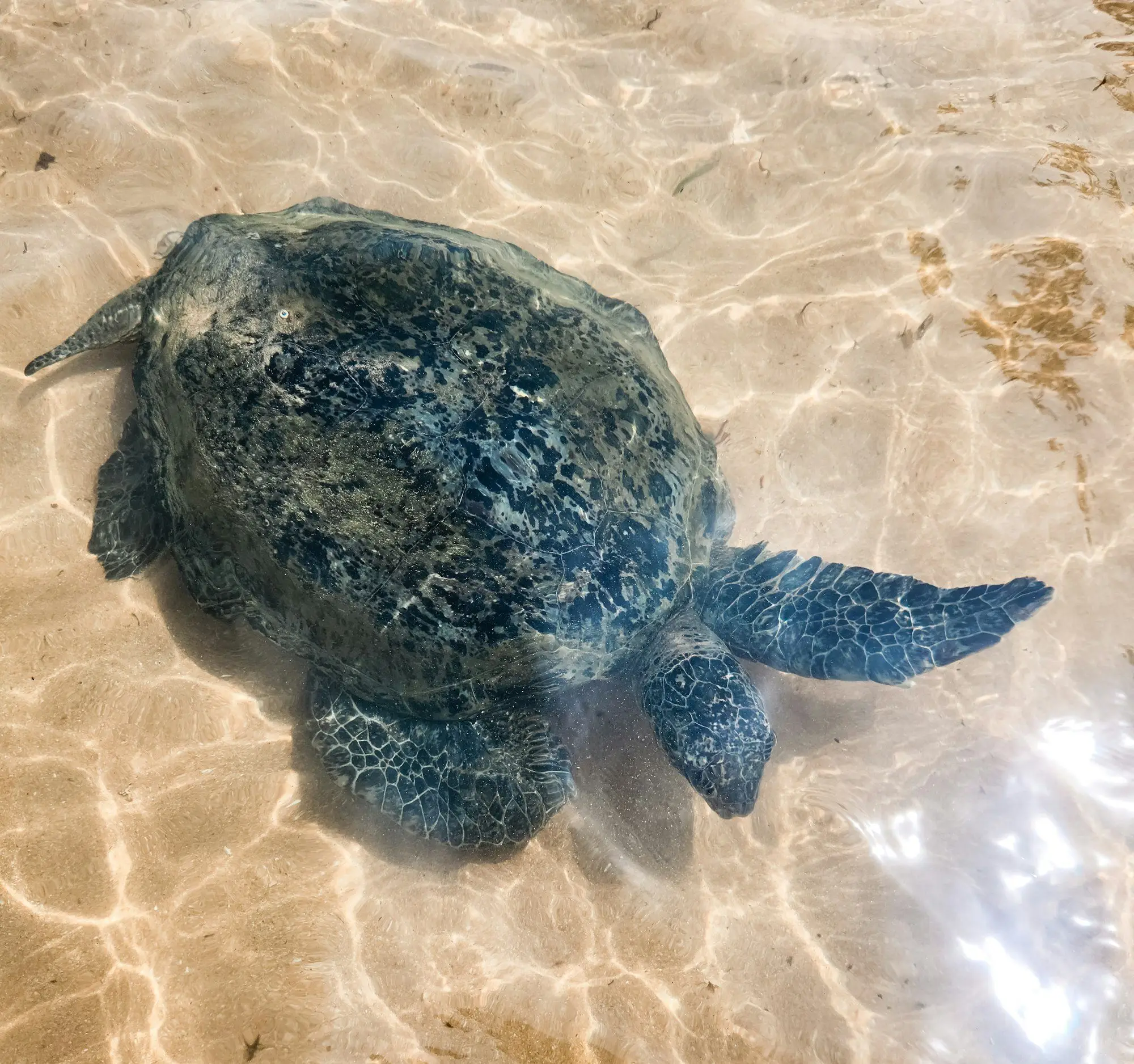
A green turtle in sunlit shallows. At Rekawa you'll meet them at night, by a guide's red torch.
Where to stay
- Goyambokka and Silent Beach: the best swimming and some of the nicest small hotels and villas, a few minutes from town.
- Medaketiya and Marakolliya: long sea-view stretches of cabanas and guesthouses. Better value and great for walks, but not for swimming.
- Hiriketiya and Dickwella: surf hostels, guesthouses and boutique stays around the bay. Book early in peak season.
- Rekawa and further east: remote beach villas for real quiet. You'll depend on a driver or tuk-tuk.
Getting there
- By road: about 3¾ hours from Colombo Airport, 3½ hours from Colombo, an hour from Mirissa and three hours from Ella. The Southern Expressway runs inland past the town, with an exit at Beliatta, a short drive away.
- From Ella, via a safari: coming down from the hills, you can turn the drive into a Yala day. A morning drive puts you on the beach by early afternoon, while an afternoon drive gets you in after dark.
- By train: the coastal line from Colombo was extended past Matara to Beliatta in 2019. From Beliatta station it's a short tuk-tuk ride into Tangalle.
- Getting around: tuk-tuks are everywhere. Hiriketiya is about 30 minutes west and Rekawa a short ride east. Agree the fare before you set off.
- Private transfers: our transfers page covers rides along the coast, to the airport and up to the hills.
Safari from Tangalle: the easy Yala day
Tangalle sits closer to Yala than the beach towns further west, which makes it a sweet spot for a safari. The morning drive means a pickup around half past three instead of before three, and you're back by early afternoon.
Yala is about two hours away. It's Sri Lanka's best park for leopards, though a sighting is possible, never guaranteed. Elephants are likely, and crocodiles, deer, buffalo and peafowl are very likely. Yala's jeep crowding is real in peak season. To keep it calm, ask your driver to hang back from the jams and switch off at sightings. Blocks 1 and 2 usually close for a few weeks in September–October (in 2026 the closure was set for 14 September to 15 October, with Block 5 on the Galge side unaffected).
Udawalawe is closer still, about 1½ hours away. Wild elephants are very likely on any drive, and it's quieter, so it's the better pick for families or if you've already done Yala.
Wilpattu is around seven hours away, so it's not a day trip from here.
Hiriketiya works almost the same way. Yala is about 2¼ hours from the bay, with a pickup around a quarter past three, and Udawalawe is under two hours.
Want two drives, or to be near the front of Yala's dawn queue? Move on to Tissamaharama, about 1½ hours east, for a night. From there the gate is only about half an hour away, so you can do an afternoon drive on arrival and a morning drive the next day.
Bundala National Park, on the road towards Yala, is a coastal wetland best known for its birdlife. We don't run safaris there (yet), and it's worth a look if birds are your thing. For elephants and a chance of a leopard, Yala or Udawalawe make more sense.
Going on to Ella
If the hills are next, bring your bags on safari and carry on afterwards.
You leave around half past three, enter Yala at 6, stop for lunch after the drive and reach Ella by mid-afternoon. Swap in Udawalawe for a later pickup and an earlier arrival. Want more beach first? Mirissa and Weligama are an hour west. For blocks, crowds and the best months, see our Yala National Park guide.
Best time to visit
- December to April: calm, sunny and the best swimming. Hiriketiya is at its busiest, so book ahead.
- May to September: the south-west monsoon brings rougher seas and showers, but it's quieter and cheaper, and Hummanaya is at its most dramatic.
- October and November: unsettled in-between months, with bright days broken by heavy downpours.
- Turtles: they nest all year at Rekawa, and the busiest months are usually around April to July. Check locally before you go.
- Safaris: Yala's best leopard months are February to July. Udawalawe is good all year.
Good to know
Can I do a Yala safari from Tangalle in a day?
Yes, easily. Yala is about two hours away, so the morning drive means a pickup around half past three and you're back at the beach by early afternoon.
Tangalle or Hiriketiya: where should I stay?
Tangalle for long, quiet beaches and space; Hiriketiya for surf, cafés and a social scene in a small bay. They're about half an hour apart, so it's easy to visit one from the other.
Is the Rekawa turtle watch ethical?
It's the best option on this coast. Nests stay on the beach where they were laid, and local nest protectors guide visitors with red light only. Avoid places that keep turtles in tanks.
Is it safe to swim in Tangalle?
In the sheltered coves, mostly. Goyambokka and Silent Beach are usually calm from December to April, but the long open beaches face the full force of the sea and are better for walking.
Do you run safaris in Bundala?
Not yet. Bundala, on the way to Yala, is a wetland park best known for birds. For elephants and leopards, Yala and Udawalawe are both within about two hours of Tangalle.

Turn the drive into a safari day
We pick you up where you're staying, stop at the park and take you on to your next stop. Private car, private jeep, park tickets: one all-in estimate, sent on WhatsApp. No deposit, pay on the day.
Tangalle toKeep planning

Mirissa & Weligama Guide: Beaches, Whales & Safaris
Whale watching, surf lessons and the best beaches from Mirissa to Ahangama, plus easy Udawalawe and Yala safari days from the south coast.
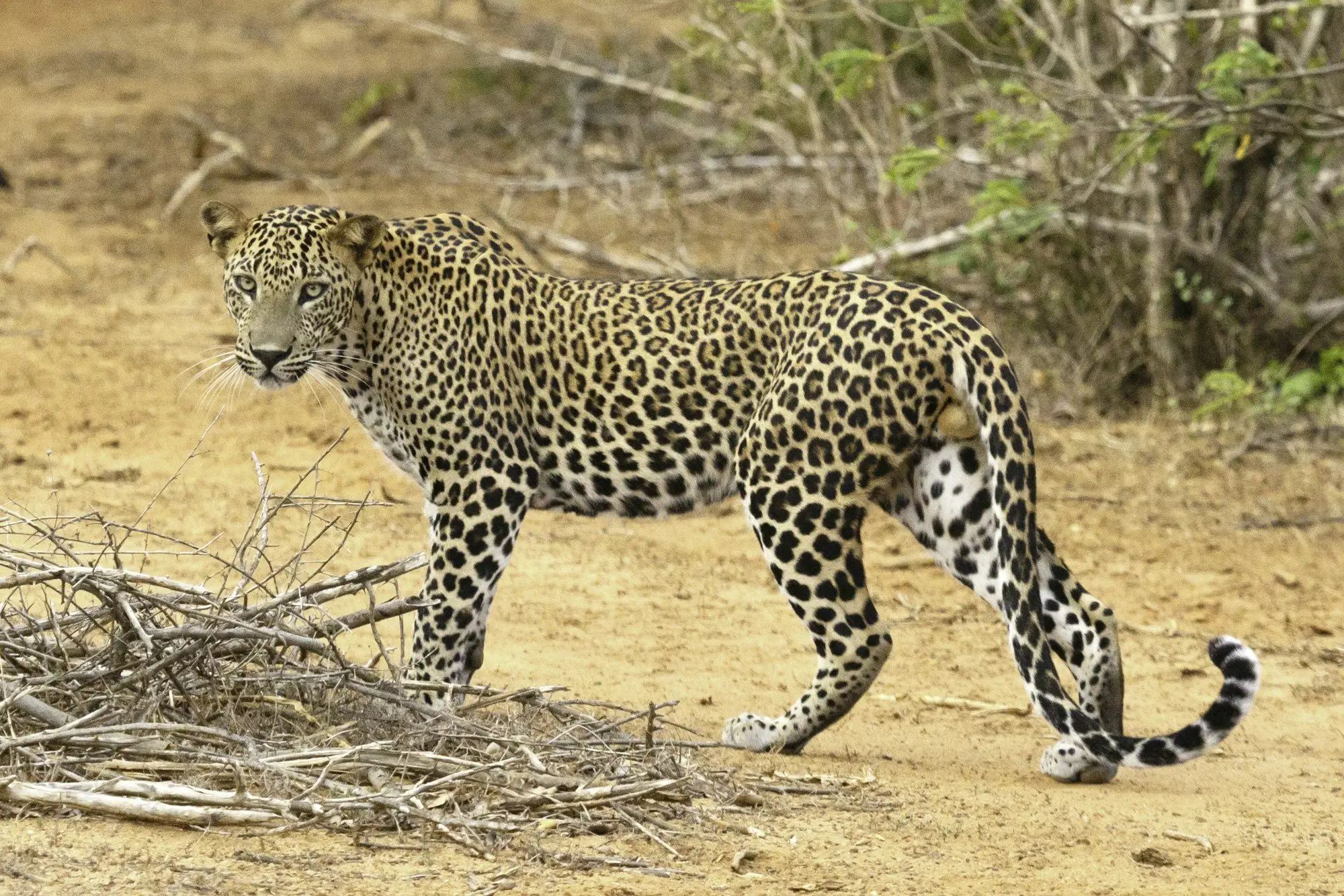

Yala National Park Guide: Leopards, Blocks & Best Time
Before your Yala safari: leopard odds, Block 1 vs Block 5, fees, safari timings, the usual Sep–Oct closure and how to avoid the jeep jams.
Ella Travel Guide: Things to Do, Stays & Safari Trips
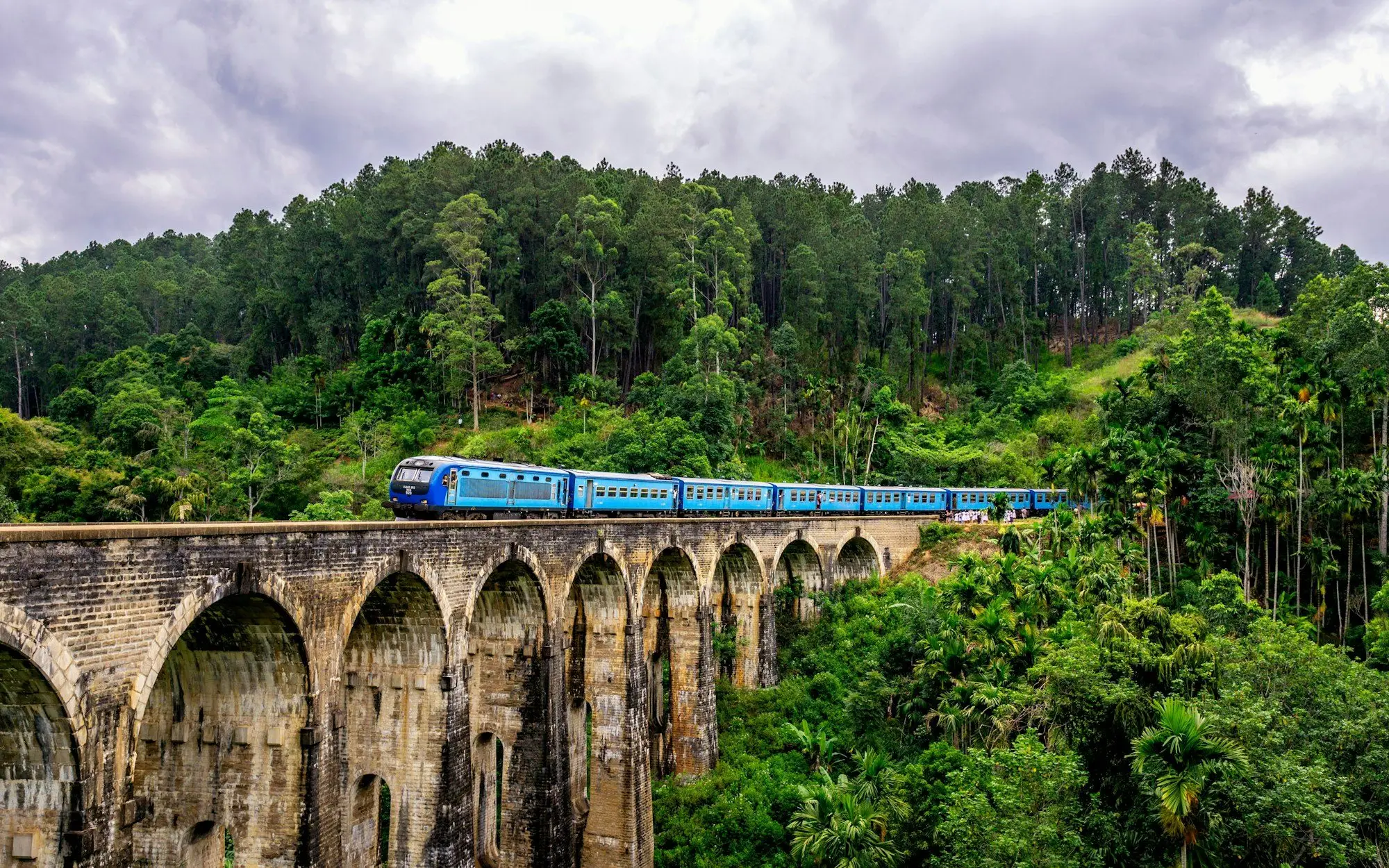
Nine Arch Bridge, Little Adam's Peak, the famous train and more, plus how to add a Yala or Udawalawe safari on your way from Ella to the coast.