Yala National Park Guide: Leopards, Blocks & Best Time
Before your Yala safari: leopard odds, Block 1 vs Block 5, fees, safari timings, the usual Sep–Oct closure and how to avoid the jeep jams.


Quick facts
- Best months
- Feb–Jul
- Usual closure
- A few weeks in Sep–Oct
- Leopard odds
- Possible, never promised
- Base town
- Tissamaharama, ~30 min
- From Ella or Mirissa
- ~2 h 45 to the gate
On this page
- Yala at a glance
- What you'll see (and realistic odds)
- Block 1, Block 5 and the quieter zones
- Best time to visit and the dry-season closure
- Morning, afternoon or full day?
- Entrance fees and what a safari costs
- Getting to Yala from Ella, the coast and Colombo
- Where to stay: Tissa, Kirinda or by the park
- How to have a better, kinder Yala safari
Yala is the best place in Sri Lanka to look for a leopard. It's the park most people picture when they think of a Sri Lankan safari: red dirt tracks, granite outcrops, lagoons lined with crocodiles and peacocks strutting across the road. If seeing a leopard is high on your list and you don't mind an early alarm to give yourself the best chance, this is your park.
Two things matter more than anything else here. First, Yala's main section usually closes for a few weeks in September–October, and the dates are announced late. Second, Yala gets busy. How and when you go makes almost as much difference as where you go, and we'll be straight with you about both.
Yala at a glance
Yala covers 979 km² of scrub, grassland, lagoons and wild coastline in Sri Lanka's far south-east, divided into numbered blocks. It was declared a wildlife sanctuary in 1900 and a national park in 1938, and it has one of the highest leopard densities in the world. It also has a lot of jeeps, which is the catch.
The practical basics: the gates open at 06:00 and close at 18:00. The base town is Tissamaharama (everyone says Tissa), half an hour from the main Palatupana gate. And the park is about 2¾ hours by road from both Ella and Mirissa, which is why so many people visit on the travel day between the hills and the beach.
What you'll see (and realistic odds)
What you might see in Yala
- Leopard Possible The best odds in Sri Lanka, especially in the dry season and on a full day. Never guaranteed.
- Asian elephant Likely
- Mugger crocodile Very likely
- Spotted deer Very likely
- Water buffalo Very likely
- Peafowl Very likely
- Wild boar Likely
- Golden jackal Possible
- Sloth bear If you're lucky Best chance May–July.
- Birds (215 species) Very likely
Our honest odds for a single half-day drive in a good season. Wild animals keep their own schedule, so nobody can promise a sighting.
Leopards first, because that's why most people come. Yala's leopards are used to vehicles, and in the dry months a sighting on any given drive is a real possibility. It is a possibility, though, not a promise. You might do three drives and see a leopard on each, or do two and find nothing but fresh pugmarks in the sand. Anyone who guarantees you a leopard is guessing, or selling.
The supporting cast is very likely to turn up: mugger crocodiles basking on the lagoon banks, spotted deer grazing in big herds and water buffalo wallowing in the shallows. Wild boar often trot across the track as if they own it, and elephants are likely, often a family group at a waterhole. Sloth bears are the rarest of the big three; your best chance is from May to July, when the palu trees fruit and the bears come out to feed.
Bring binoculars if you have them. Around 215 bird species have been recorded here, including several found only in Sri Lanka, and a single morning can turn up painted storks, bee-eaters, hornbills and a crested serpent eagle glaring down from a dead tree. Even people who arrive saying they're not bird people tend to leave with a favourite.
The scenery is half the show. Block 1 mixes open grassland with thorny scrub, big rock outcrops (Elephant Rock is the famous one), brackish lagoons and a long, empty beach. At Patanangala, on the coast, a memorial remembers the people who lost their lives here in the 2004 tsunami.
Block 1, Block 5 and the quieter zones
When people say "Yala", they almost always mean Block 1, the original 1938 core of the park, together with neighbouring Block 2. This is where the best-known leopard territories, the lagoons and the coastline are, and where nearly all the jeeps go. Most enter through Palatupana, the main gate half an hour from Tissa, where the queue starts forming well before dawn.
Block 1 has a second entrance, Katagamuwa, on the Kataragama side. It sees a small fraction of Palatupana's traffic, which makes it worth knowing about if you're staying in or near Kataragama. Our standard timings assume Palatupana, so mention it when you send your plan if you'd like to start there.
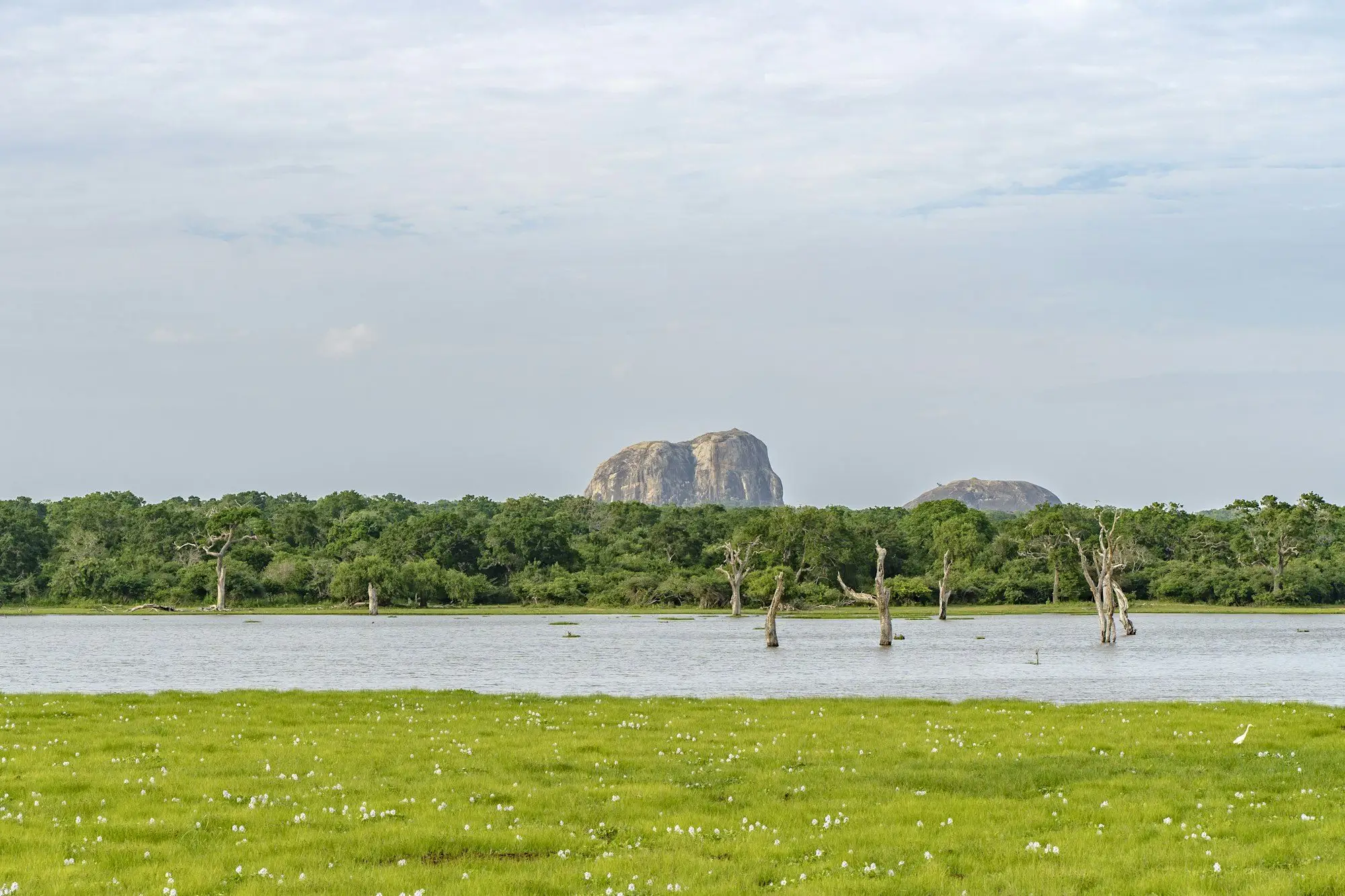
A lake, dead trees and Elephant Rock: Yala in a single frame.
Block 5 is the quiet alternative. You reach it through the Galge entrance on the Kataragama–Buttala road, roughly an hour or a little more from Tissa, and on most days only a handful of jeeps go in. The forest is thicker and the animals are less used to vehicles, so leopards are there but usually harder to spot. In exchange you get elephants around the Weheragala reservoir, sloth bear country and, when you do find something, the sighting to yourself. Galge is on the Buttala side of the park, which is handy if you're coming from Ella or Arugam Bay.
Block 5 can also be a fallback during the dry-season closure, which in 2026 covered only Blocks 1 and 2. Jeep hire there can cost a little more because it's a longer run, and our planner doesn't price Galge days, so it's one to ask us about.
Two more names you may hear. Blocks 3 and 4 are remote and see very few visitors. Lunugamvehera National Park, next door, was declared in 1995 to protect the catchment of its big reservoir, and it doubles as an elephant corridor between Yala and Udawalawe. It's entered near Thanamalwila, it's mostly about elephants and water birds, and the wildlife department now calls it Yala's "Block 6". Both are better for repeat visitors and keen naturalists than for a first safari.
Best time to visit and the dry-season closure
Yala is semi-arid, and most of its rain falls during the north-east monsoon, from around October or November to January. From February the waterholes start to shrink and the animals, leopards included, come out into the open to drink. That makes February to July the sweet spot for leopards, and May to July the best window for sloth bears. December to March is also peak season for visitors, so expect company.
Then comes the closure. In most years the Department of Wildlife Conservation shuts Blocks 1 and 2 for a few weeks at the height of the drought, somewhere between early September and the end of October, to give the animals some peace while water and food are scarce. The exact dates change every year and are announced late: the 2026 closure was announced on 26 August, less than three weeks before it began.
Outside the closure, Yala opens every day of the year, though extreme weather can shut it briefly. Cyclone Ditwah closed it for several days in late November 2025, and the main gate reopened on 3 December. For a month-by-month view of all three parks, see our guide to the best time for a safari in Sri Lanka.
Morning, afternoon or full day?
There are three ways to do Yala, and the park ticket works the same way for each.
- Morning drive (06:00 to about 10:30). The favourite, for good reason: animals are most active at first light and the air is cool. The downside is the queue: jeeps line up at Palatupana from around 05:30, so you'll be up before 5 am even in Tissa, and far earlier from the coast or Ella.
- Afternoon drive (about 14:30 to 18:00). Hot at the start, but the light turns golden after 4 pm and the animals come back out as it cools. It's the humane option if you're travelling in from far away, and leopards are seen in the afternoons too.
- Full day (06:00 to 18:00). The best way to see Yala properly. You range further, wait longer at promising spots and avoid the worst of the convoys once the half-day jeeps head out. Full-day jeeps must rest from 12:00 to 14:00 at a designated picnic site, and you can't leave the park and come back in on the same ticket.
If leopards are the whole point, two drives beat one. A full day, or a morning drive plus the next afternoon with a night in Tissa, doubles your time in the right places, and time is the only thing that reliably improves the odds.
Travelling with children? Yala is fine for kids who can cope with a few hours of bumpy, dusty driving, and under-6s go in free. The afternoon drive spares them the brutal wake-up, and a half day is plenty for most families. If your children are small or easily bored, Udawalawe's open plains deliver big animals faster.
Whatever you book, pack for heat and dust: a hat, sunscreen, plenty of water, a scarf or buff for the dust and a light layer for the pre-dawn ride, which can feel cool in an open jeep. Facilities inside the park are limited to the picnic sites, so use the toilets at the gate before you set off.
Entrance fees and what a safari costs
Foreign visitors pay a per-person park fee, a per-jeep service and vehicle charge, and 18% VAT on top. Children aged 6 to 12 pay a reduced rate, and under-6s go free. The table below shows foreigner rates for 2025–26, and we confirm the exact amount before you travel.
| Adult | US$25 |
|---|---|
| Child (6–12 years) | US$15 |
| Under 6 | Free |
| Per jeep (service + vehicle fee) | about US$11 |
| VAT on top | 18% |
- 1 adult$42
- 2 adults$72
- 2 adults + 1 child$90
- 4 adults$131
Foreigner rates for 2025–26 as reported by operators and traveller receipts, for one jeep, VAT included. Wild Ceylon estimates always include park tickets, and we confirm the exact amount before you travel.
You can pay at the gate in cash (cards are accepted at the bigger gates) or buy an e-permit in advance through the Department of Wildlife Conservation's online system, which adds a small convenience fee. If you've booked a jeep, the driver usually sorts the tickets at the counter while you wait.
On top of tickets, you need a jeep. On the open market a private Yala jeep with driver typically costs around US$40–60 for a half day and US$70–110 for a full day. It takes up to six people, so the cost per person drops quickly in a group. Shared seats exist, but you give up any say over where you go and how long you stay. Tipping your jeep driver is customary if they've worked hard for you, though never compulsory.
The third cost, and the one people forget, is getting there. Every Wild Ceylon estimate rolls the car, the private jeep and the park tickets into one all-in price for the day, and the sample day below shows what that looks like from Ella. Our safari prices page breaks it down for every park.
Getting to Yala from Ella, the coast and Colombo
Driving to Yala: Palatupana Entrance (Block 1)
| From | Drive | Morning pickup | Afternoon pickup |
|---|---|---|---|
| Tissamaharama | 30 min · 17 km | 05:00 | 13:45 |
| Ella | 2 h 45 · 106 km | 02:45 | 10:45 |
| Tangalle | 2 h · 98 km | 03:30 | 12:15 |
| Mirissa | 2 h 45 · 137 km | 02:45 | 10:45 |
| Arugam Bay | 3 h 45 · 169 km | too early | 09:45 |
| Colombo | 5 h · 265 km | too early | 08:30 |
Door-to-gate times with normal traffic, rounded to 15 minutes. Tap a town to plan from there.
From Ella, the road drops through the Ella Gap to Wellawaya, then runs south across the plains to Tissa. It's about 2¾ hours to the gate, so a morning drive means leaving before 3 am. The winding descent is slower in the dark, and then you can sleep for most of the rest. Most people do Yala on the move from Ella down to the beach, which is exactly the day below.
From the south coast, Tangalle and Hiriketiya are the easiest, at about two hours. Mirissa and Weligama are about 2¾ hours away, so the same small-hours pickup applies. From Galle or Unawatuna, at about three hours, the morning drive is too early to be sensible: take the afternoon drive instead, or stay a night in Tissa and go in fresh.
From Arugam Bay, it's nearer four hours, so think afternoon drive or overnight stay. From Colombo or the airport, at five hours or more, don't try it as a day trip. Leave after breakfast, do the afternoon drive and sleep in Tissa, or better still, break the journey on the south coast.
It's a long day: up before 3 am, a morning in the park, lunch on the road and an early-afternoon arrival at the beach. If that pickup time makes you wince, the afternoon version from Ella lets you sleep in, but you won't reach Mirissa until late in the evening. Pick whichever suits you; the leopards don't mind either way.
If you're travelling by bus, Tissa is the hub. Buses run there from Matara and the coast, from Wellawaya (change there for Ella) and from Colombo, and any guesthouse in town can find you a jeep.
Where to stay: Tissa, Kirinda or by the park
Staying near the park turns a start before 3 am into one at about 5 am, and makes a second drive easy. You have three good options.
Tissamaharama is the practical choice. It's a proper town with the most guesthouses and hotels at every budget, plus restaurants, ATMs and a big fleet of safari jeeps. It grew up around Tissa Wewa, an ancient reservoir dating back more than 2,000 years that's lovely at sunset, and the big white stupa of the Tissamaharama temple. The Palatupana gate is half an hour away.
Kirinda is a small coastal village closer to the gate and home to one of Sri Lanka's Malay communities. It's quieter than Tissa, with a long, wild beach that's better for walks than swims and a temple on a rock above the sea. Kirinda is one of the places said to be where Princess Viharamahadevi came ashore. Choose it for sea air and fewer tuk-tuks.
By the park. The closest you can sleep to Palatupana is at one of the lodges and tented camps along the park boundary. They range from comfortable to very expensive, and many run their own jeeps. The wildlife department also has a few simple bungalows inside Yala, booked directly with the DWC and usually well in advance.
Kataragama, about half an hour north of Tissa, is another option and handy for the Katagamuwa gate. It's one of Sri Lanka's great pilgrimage towns, sacred to Buddhists, Hindus and Muslims alike, and the evening puja at the main shrine is worth seeing. Dress modestly, covering shoulders and knees, and take off your shoes where others do.
How to have a better, kinder Yala safari
Let's be straight about the crowds. Yala has about 550 registered safari jeeps, and in busy periods several hundred can enter in a single session. The government's own plan is to cut that to roughly 250–300 per session. There's decent mobile signal inside the park, so news of a leopard travels fast, and a single cat on a rock can end up with a dozen or more jeeps jostling around it. Conservationists have warned about speeding and crowding here for years.
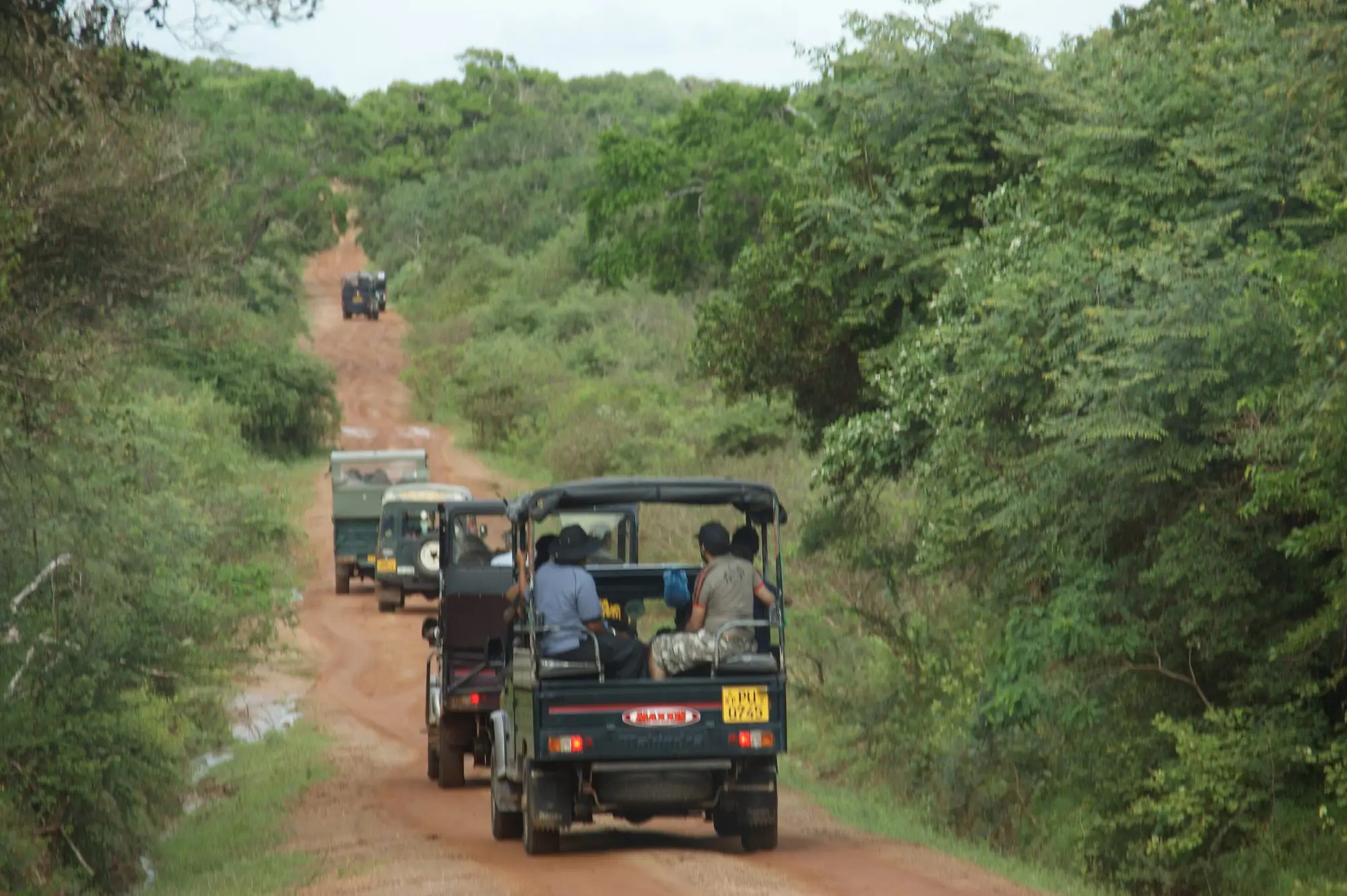
A line of jeeps on a Yala track. When a leopard is spotted, they arrive fast.
Things are changing slowly. Since 1 January 2024, only jeep drivers trained and certified by the Department of Wildlife Conservation may drive in Yala. Drivers who break the rules on distance and speed risk fines or losing their licence, and exit times are strictly enforced, so if your driver turns for the gate in the middle of a sighting, that's why. In 2026 the government also announced plans to fit jeeps with GPS trackers. Good news, but none of it makes the queue disappear tomorrow.
Here's how to have a calmer drive anyway:
- Go for a full day. The park quietens once the half-day jeeps leave, and you'll spend less time in convoys.
- Try Block 5, or the Katagamuwa gate. Both see a fraction of Palatupana's traffic.
- Avoid the peaks. Weekends, Poya (full-moon) holidays and Sri Lankan school holidays bring big local crowds. A weekday in May is far calmer than a Saturday in late December.
- Tell your driver what you want. Say you're happy to skip a leopard jam, and that you'd rather sit quietly with an elephant herd or a lagoon full of birds. Good drivers are glad to hear it.
- Ask for engine-off sightings. Engines off, voices low, everyone seated. Animals stay longer and behave naturally.
- Never ask to go off-track or get closer. And never feed anything, from monkeys to the junglefowl at the picnic sites.
- Take all your rubbish out with you, especially plastic.
When you're ready to plan, our Yala safari page shows session times and all-in prices from the most popular pickup towns, so you can see at a glance what your day would look like.
Good to know
Is Yala open in September and October?
Only partly. Blocks 1 and 2, where most safaris happen, close for a few weeks in most dry seasons, and the dates are usually announced only two to three weeks ahead. In 2026 the closure was set for 14 September to 15 October, with Block 5 and Udawalawe unaffected.
Will I definitely see a leopard in Yala?
Nobody can promise that. Yala gives you the best leopard odds in Sri Lanka, and a full day or two separate drives improves them, but plenty of people leave without seeing one.
What are the Yala safari timings?
The gates open at 06:00 and close at 18:00. Morning drives run until about 10:30 and afternoon drives start at about 14:30, while full-day jeeps stay in all day with a break at a picnic site from 12:00 to 14:00.
Is Yala or Udawalawe better?
Yala for leopards, variety and scenery; Udawalawe for close-up elephants, fewer jeeps and a slightly shorter drive from Ella or the coast. If Yala is closed or the crowds put you off, Udawalawe is the easy swap.
Can I do a Yala safari as a day trip from Mirissa or Ella?
Yes. Both are about 2¾ hours from the gate, so a morning drive means a pickup before 3 am. The afternoon drive lets you sleep in, but you'll arrive at your next stop late in the evening.
Are park tickets included in a Wild Ceylon estimate?
Yes. Every estimate includes the car, the private jeep and the park tickets for your group, and there's nothing to pay until the day.
Turn the drive into a safari day
We pick you up where you're staying, stop at the park and take you on to your next stop. Private car, private jeep, park tickets: one all-in estimate, sent on WhatsApp. No deposit, pay on the day.
Ella toKeep planning
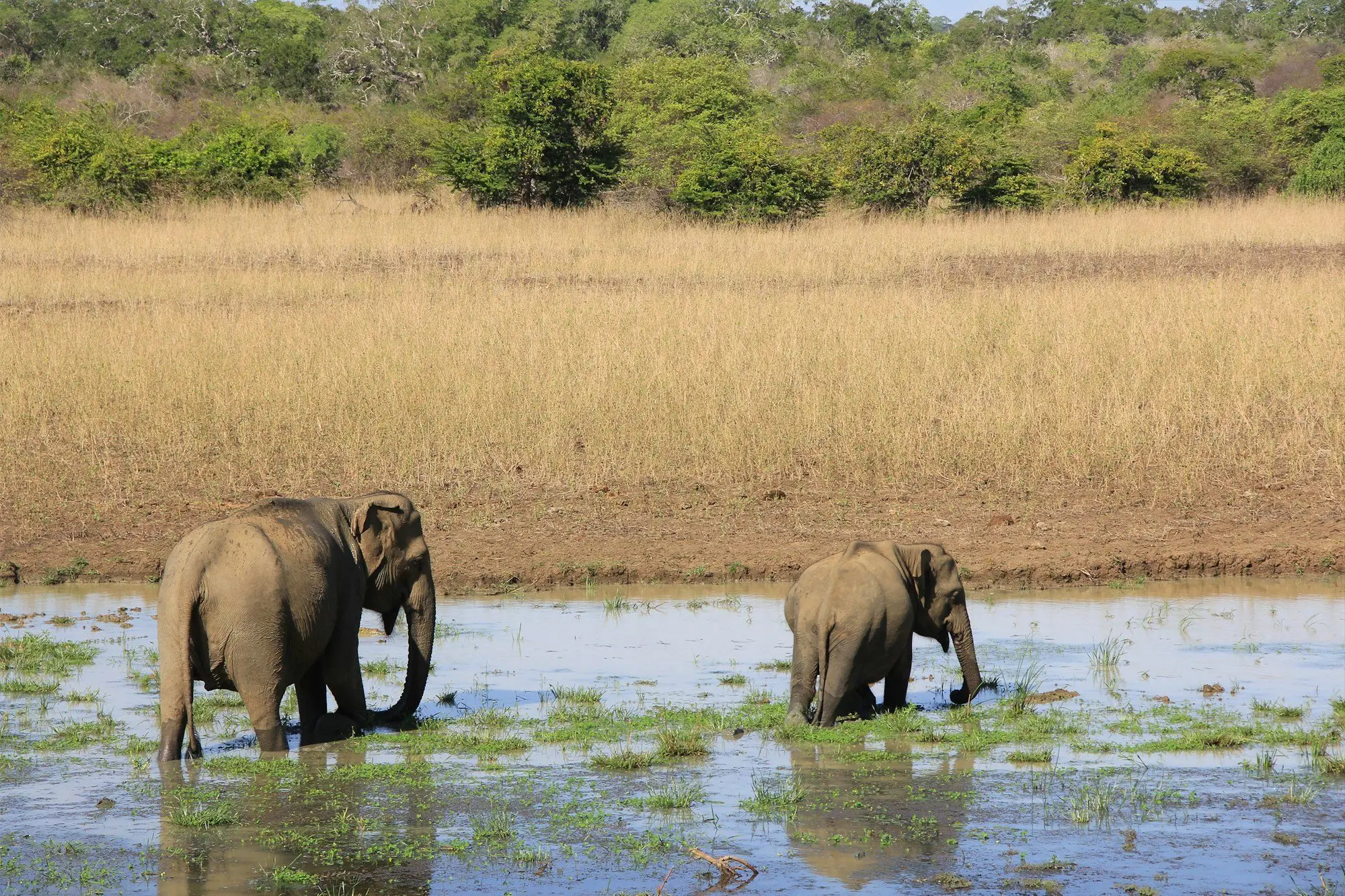

Best Time for a Safari in Sri Lanka: Month-by-Month Guide
When to visit Yala, Udawalawe and Wilpattu, which months parks close, how the two monsoons shift wildlife, and the best park for each month.
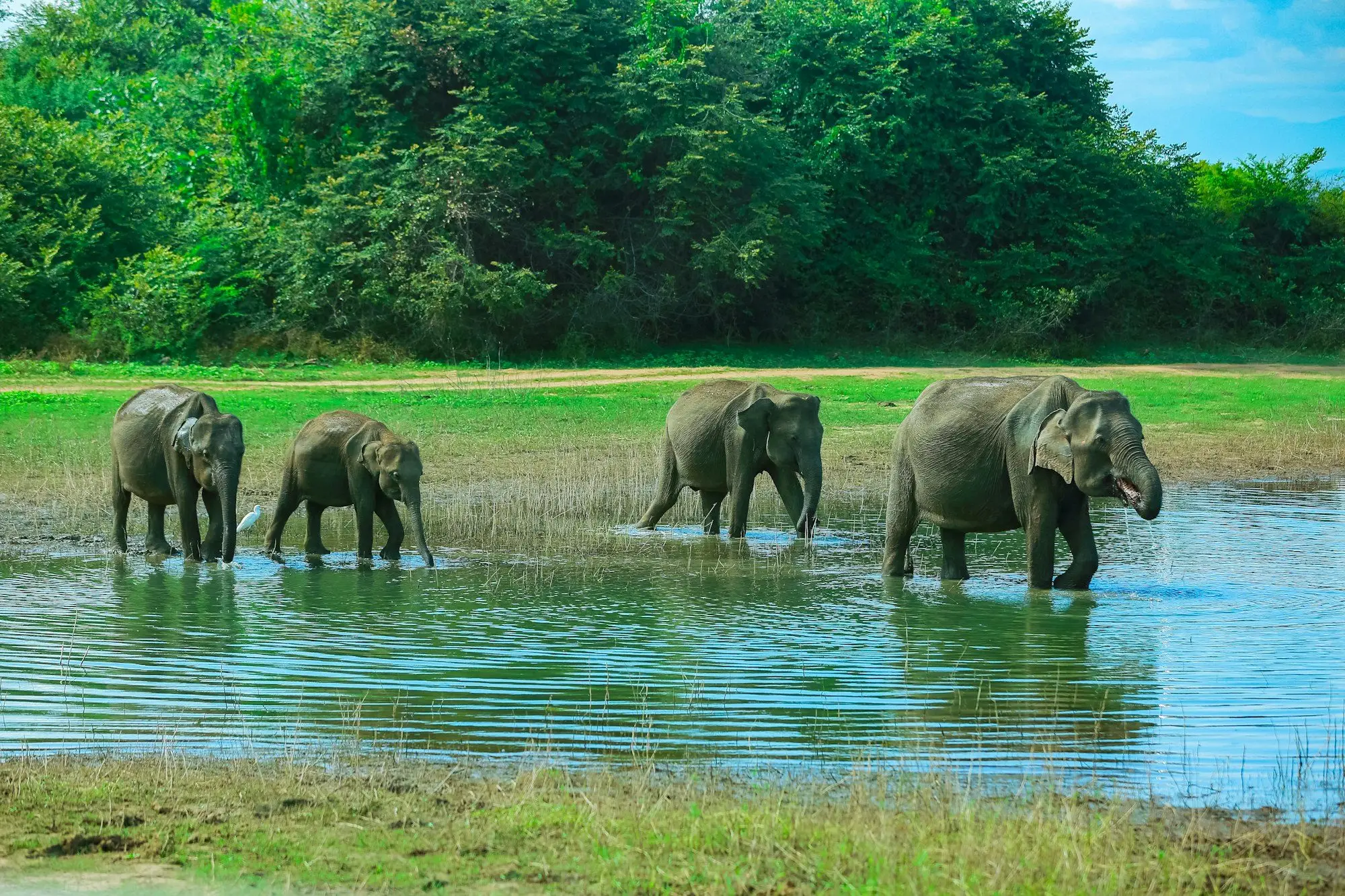

Udawalawe National Park Guide: Elephants, Fees & Tips
Plan an Udawalawe safari: elephant herds, morning vs afternoon drives, entrance fees, the Elephant Transit Home and easy trips from Ella or Mirissa.
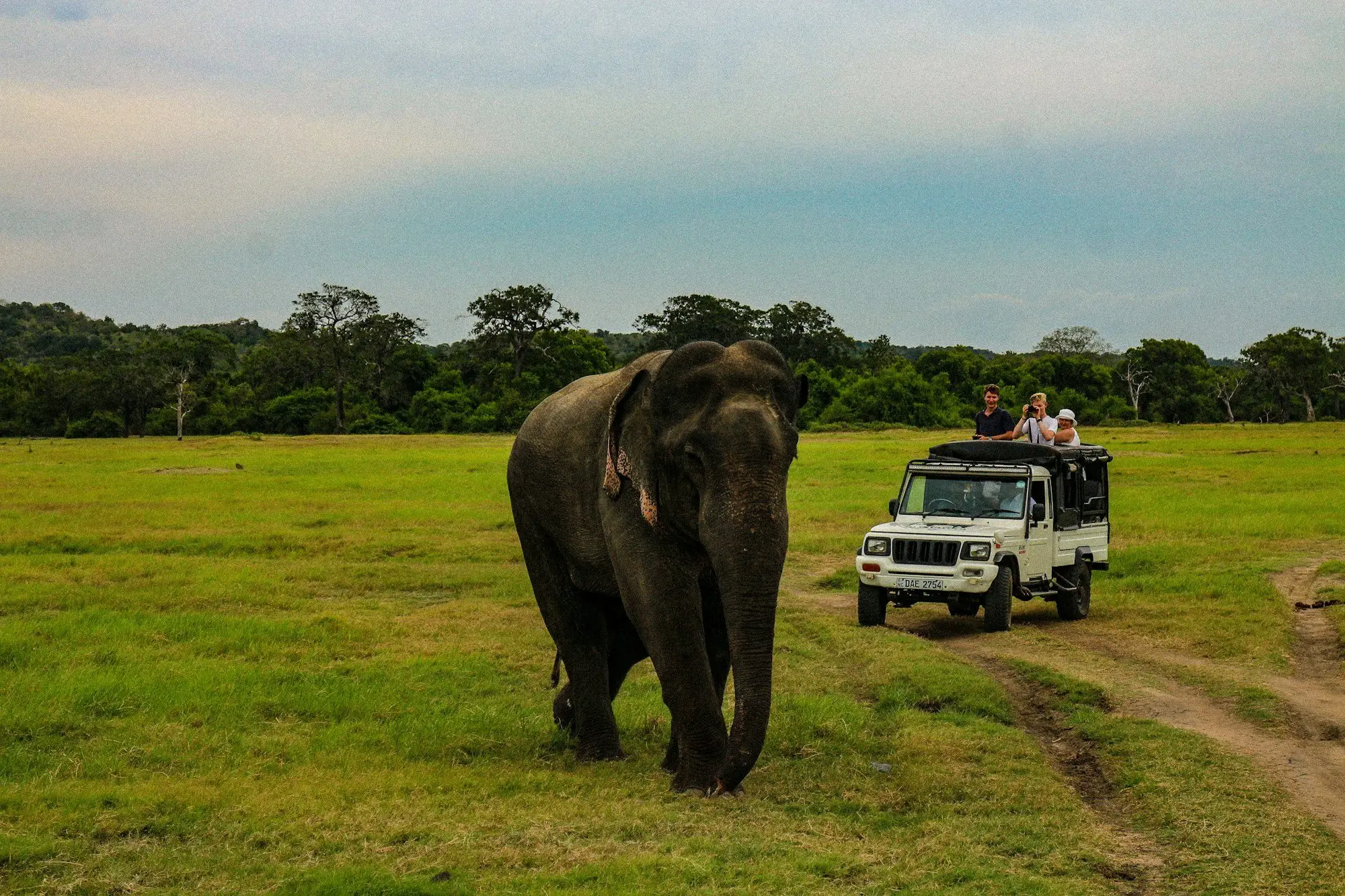
Ella to Mirissa via Yala or Udawalawe: Safari on the Way
How the Ella to Mirissa safari transfer works: Yala vs Udawalawe, timings, luggage, all-in costs and the reverse trip from Mirissa to Ella.