Hikkaduwa Travel Guide: Reef, Turtles & Safari Trips
Snorkel the reef, surf the breaks and find calmer beaches near Hikkaduwa, then plan an Udawalawe or Yala safari day from the south-west coast.

Quick facts
- Best months
- Nov–Apr (surf best Dec–Mar)
- How long
- 2–4 nights
- Closest park
- Udawalawe, ~2 h 45
- Yala
- ~3 h 15, best on a travel day
- Good for
- Snorkelling, surf lessons, nightlife
On this page
Hikkaduwa is one of the liveliest beach towns on Sri Lanka's south-west coast: a long strip of guesthouses, surf shops and beach bars facing a shallow coral reef, where green turtles graze a few metres from the sand. It's a good place to learn to surf, snorkel over the reef or nurse a cold beer at sunset with music in the background. If you're after an empty beach and total silence, you'll be happier a little further along the coast.
The calendar matters more than anything here: this is very much a November-to-April town. That's when the sea is calm, the water is clear enough to snorkel and the waves are clean. From May the south-west monsoon churns everything up, red flags go up on the beach and plenty of places close or slow right down.
It's also a practical base for a safari. Udawalawe, the park where elephant herds are very likely, is about 2¾ hours inland, so a day trip is realistic. Yala is further, but it slots neatly into a travel day if you're moving on to Ella or the deep south.
Is Hikkaduwa right for you?
You'll like Hikkaduwa if you want:
- easy surf lessons on a sandy beach break, with reef waves to graduate to;
- snorkelling straight off the beach on calm mornings;
- turtles in the wild, close to shore;
- a social scene, with beach bars and live music most nights in season;
- Galle Fort half an hour down the road.
It's less suited to anyone who wants polished resorts or a private-feeling beach. The Galle Road runs right behind the strip, so traffic noise is part of the deal, and in peak season the main stretch gets busy. Bentota, 45 minutes north, does manicured resorts better, and the coves around Unawatuna are calmer.
Best things to do in Hikkaduwa
Snorkel the coral sanctuary
The reef at the northern end of town became Sri Lanka's first marine sanctuary in 1979 and is now Hikkaduwa National Park. It's a shallow fringing reef, mostly a few metres deep, with some 60 species of coral and over 170 kinds of reef fish recorded.
Keep your expectations realistic. Bleaching in 1998 killed much of the coral, the 2004 tsunami dumped debris on what survived, and boat traffic and pollution haven't helped since. On a calm, clear morning you'll still see parrotfish, butterflyfish and plenty more, and very often a turtle. On a choppy afternoon you'll mostly see sand.
- Go early, before the wind picks up and the water clouds over.
- Hire your mask and fins from a dive shop, and ask where the current is running that day.
- Never stand on the coral. A rash vest beats slathering on sunscreen.
- Skip the glass-bottom boats. In water this shallow, boats and anchors are hard on a reef that's still recovering.
Dive centres in town run trips to deeper reefs and wrecks for certified divers, and courses if you'd like to learn.
Surf the reef, or learn on the sand
Hikkaduwa's waves work from about November to April, with December to March the cleanest. The main spots:
- Narigama beach break, at the southern end of town: sandy bottom, gentle peaks and most of Hikkaduwa's surf schools. Beginners start here.
- Main Reef, the A-frame in front of town: lefts and rights over shallow coral. Busy, and best for intermediates and up.
- North Jetty, near the harbour: a punchy left for intermediates.
- Benny's: a fast, hollow left over shallow reef, for experienced surfers only.
Bring reef booties for the reef breaks and a little first-aid kit for coral cuts. The waves here are generally smaller and friendlier than Arugam Bay's, which is exactly why Hikkaduwa is so popular for a first surf trip.
Beyond the beach
- The tsunami memorial at Peraliya, a few minutes north. In 2004 the tsunami struck a packed coastal train here, the worst rail disaster on record. A tall standing Buddha, given by Japan and modelled on the Bamiyan Buddhas, now faces the sea. It's a sobering, worthwhile stop.
- Ambalangoda, about 15 minutes north, is the home of Sri Lanka's carved wooden masks. Workshops and small museums show how they're made and what the dance and demon masks mean.
- The Madu River at Balapitiya, about half an hour north: a boat trip through mangrove channels to a cinnamon-peeling island and a temple on its own islet. Mornings are best for birds and monitor lizards.
- Galle Fort, half an hour south, for an afternoon on the ramparts. Our Galle & Unawatuna guide covers it.
At temples, cover your shoulders and knees, take off your shoes and hat, and never pose for a photo with your back to a Buddha statue.
Seeing turtles responsibly
Green turtles feed on the algae and seagrass just off Hikkaduwa's main beach, often in water barely waist-deep. Watching one surface beside you while you swim is one of the best wildlife moments on this coast, and it costs nothing.
The problem is what happens on the busiest stretch, known as Turtle Beach. Locals sell seaweed so visitors can hand-feed the turtles, crowds form a ring around them, and people touch and pose with them despite signs asking them not to. Turtles that are fed learn to hang around people instead of foraging, and handling stresses them and can damage their skin and shells.
How to do it well:
- Watch from a few metres away, and never surround a turtle, on the sand or in the water.
- Don't touch, chase or hold one, however tame it seems.
- Don't feed them, and that includes paying someone else to lure one closer with seaweed.
- Leave the turtle a clear path to deeper water and to the surface to breathe.
- Snorkel quietly and let the turtle decide how close it comes.
What about hatcheries? Several sit along this coast. Some genuinely help, but many keep hatchlings in tanks for days so visitors can see them, which weakens the babies before they ever reach the sea. Our Bentota guide explains how to tell the difference. If you'd like to see turtles nesting in the wild, the night-time turtle watch at Rekawa, near Tangalle, is the better experience.
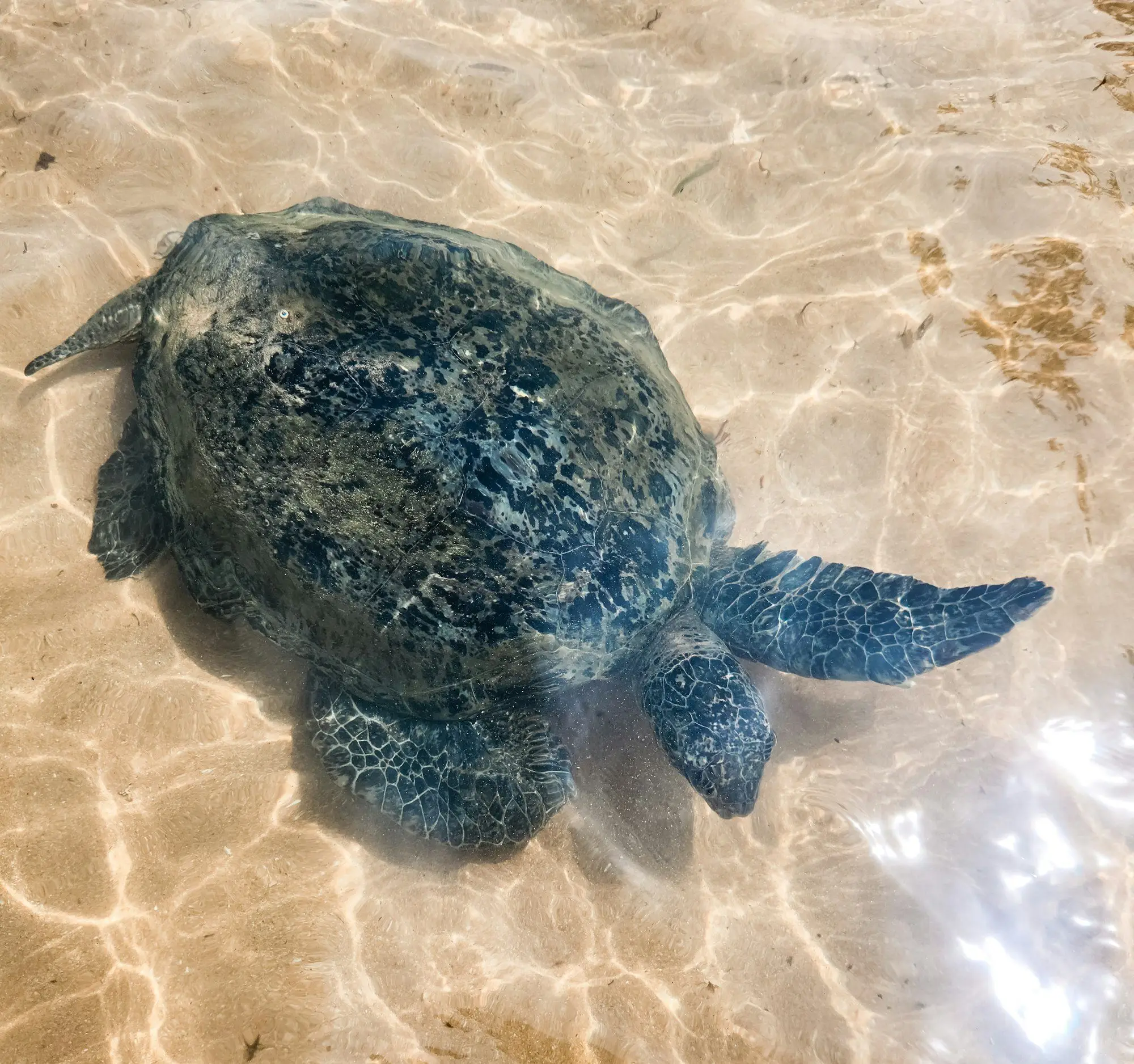
A green turtle in clear shallows off Sri Lanka's coast. The best sightings are the ones nobody is crowding.
Where to stay
Hikkaduwa runs for several kilometres along the Galle Road, and where you sleep changes the feel of your stay.
- The north end, by the coral sanctuary: closest to the snorkelling, with mid-range hotels and some older resorts.
- Wewala: from Turtle Beach south to Narigama, the busiest stretch, with bigger hotels, shops and most of the nightlife.
- Narigama: a little lower-key, with the beginner surf break, surf camps and plenty of guesthouses.
- Thiranagama: the southern end, quieter and more upmarket, and still a short tuk-tuk ride from everything.
Wherever you book, check which side of the Galle Road your room is on. A sea-side room away from the traffic is worth paying a bit more for.
Getting there
- From the airport: about 2¾ hours by private car, most of it on the expressway.
- From Colombo: about 2½ hours by car. The coastal train from Colombo Fort is the fun alternative: it runs right beside the sea, Hikkaduwa has its own station, and second-class seats cost very little.
- From Galle: half an hour by road, or a short hop on the train.
- From Ella: about 4¼ hours by road, or a full day with a safari stop (see below).
Tuk-tuks are everywhere for getting around. Agree the fare before you set off.
Safari from Hikkaduwa
Udawalawe is the natural choice. It's the closest of the three parks, about 2¾ hours away, and the best place in Sri Lanka for elephants: herds with calves are very likely on any drive. A morning safari means a pickup around 3 am, the gate as it opens at 6, and lunch on the way back to the beach. You can sleep in and take the afternoon drive instead, but then you won't be back in Hikkaduwa until late evening.
Yala is about 3¼ hours away, which makes a dawn drive unrealistic from here. Pick it if a leopard is top of your list: do the afternoon drive and sleep near the park in Tissamaharama, or carry on to Ella. Leopards are possible on any Yala drive, but nobody can guarantee one, and the park gets crowded with jeeps, especially in the morning queue at the main gate. Our Yala guide explains how to have a calmer safari.
Wilpattu, in the north-west, is six hours away. It fits at the start or end of a trip near the airport, not as a day out from here.
The best day out: Hikkaduwa to
The smartest safari from Hikkaduwa is one that gets you somewhere. If your route heads from the beach up to the hills, you'd otherwise sit in a car for over four hours to reach Ella. Put Udawalawe in the middle and it becomes the best travel day of your trip.
The plan above uses the afternoon drive, so you leave mid-morning and reach Ella in the evening. Prefer the park at dawn? The same route with a morning drive means a pickup around 3 am, and you're in Ella by early afternoon. Either way, the price covers the private car and driver, your own jeep and the park tickets. There's no deposit, you pay on the day, and you can change plans free of charge up to 48 hours before.
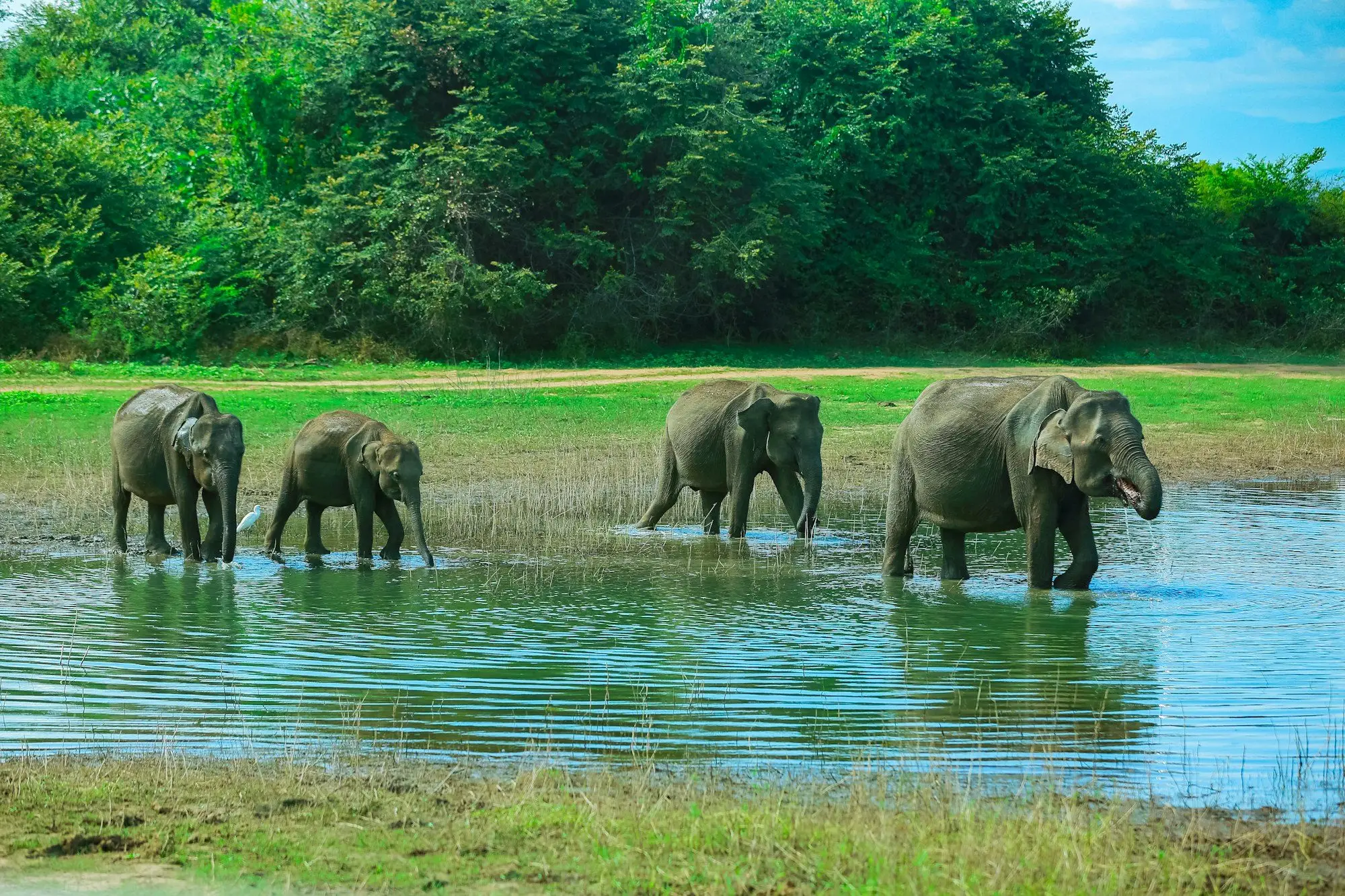
An elephant herd with calves crossing water in Udawalawe, the closest park to Hikkaduwa.
Best time to visit
- November to April is the season: dry and sunny, with a calm sea. December to March is the sweet spot for surf and snorkelling. Prices peak over Christmas and New Year, so book ahead.
- May to September brings the south-west monsoon: rough seas, strong currents and showers, and many places close. Swim only where it's flagged as safe. Surfers decamp to Arugam Bay on the east coast, where the season is just starting.
- October is an unpredictable in-between month, with heavy downpours on some days.
- Turtles are around all year, but you'll only see them properly when the sea is calm.
Good to know
Can I do a safari from Hikkaduwa in a day?
Yes. Udawalawe is about 2¾ hours away, so a morning drive means a pickup around 3 am and you're back on the coast by early afternoon. Yala is further and works best as an afternoon drive on your way east.
Udawalawe or Yala from Hikkaduwa?
Udawalawe for a day trip: it's closer, open all year and elephants are very likely. Pick Yala if a leopard is your priority and you're heading that way anyway, knowing that sightings are possible but never guaranteed.
Is it OK to feed the turtles at Hikkaduwa?
No. Feeding and touching the turtles changes their behaviour and can hurt them. Skip the seaweed sellers and watch from a few metres away.
When is surf season in Hikkaduwa?
Roughly November to April, with the cleanest waves from December to March. From May the south-west monsoon makes the sea rough and messy.
Is Hikkaduwa good for beginner surfers?
Yes. Surf schools teach on the sandy beach break at the Narigama end of town. The reef breaks in front of town are for confident intermediates and up.
How long is the drive from Hikkaduwa to Ella?
About 4¼ hours direct. Adding an Udawalawe safari on the way turns it into a full day, but a far more interesting one.
Turn the drive into a safari day
We pick you up where you're staying, stop at the park and take you on to your next stop. Private car, private jeep, park tickets: one all-in estimate, sent on WhatsApp. No deposit, pay on the day.
Hikkaduwa toKeep planning
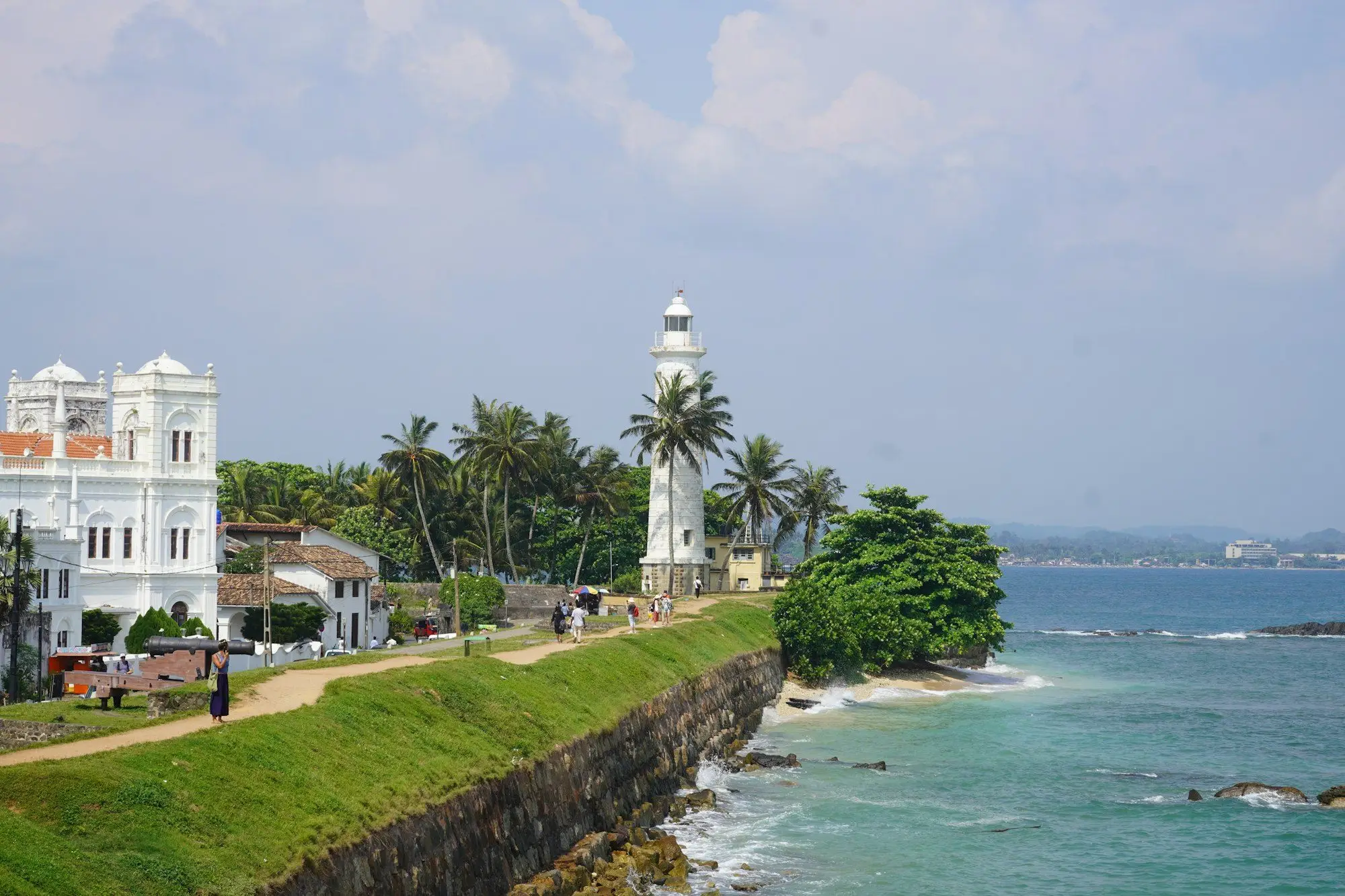

Galle & Unawatuna Guide: Fort, Beaches & Safari Days
Walk Galle Fort's ramparts, swim at Unawatuna and Jungle Beach, and see how an Udawalawe or Yala safari fits into a stay on the Galle coast.
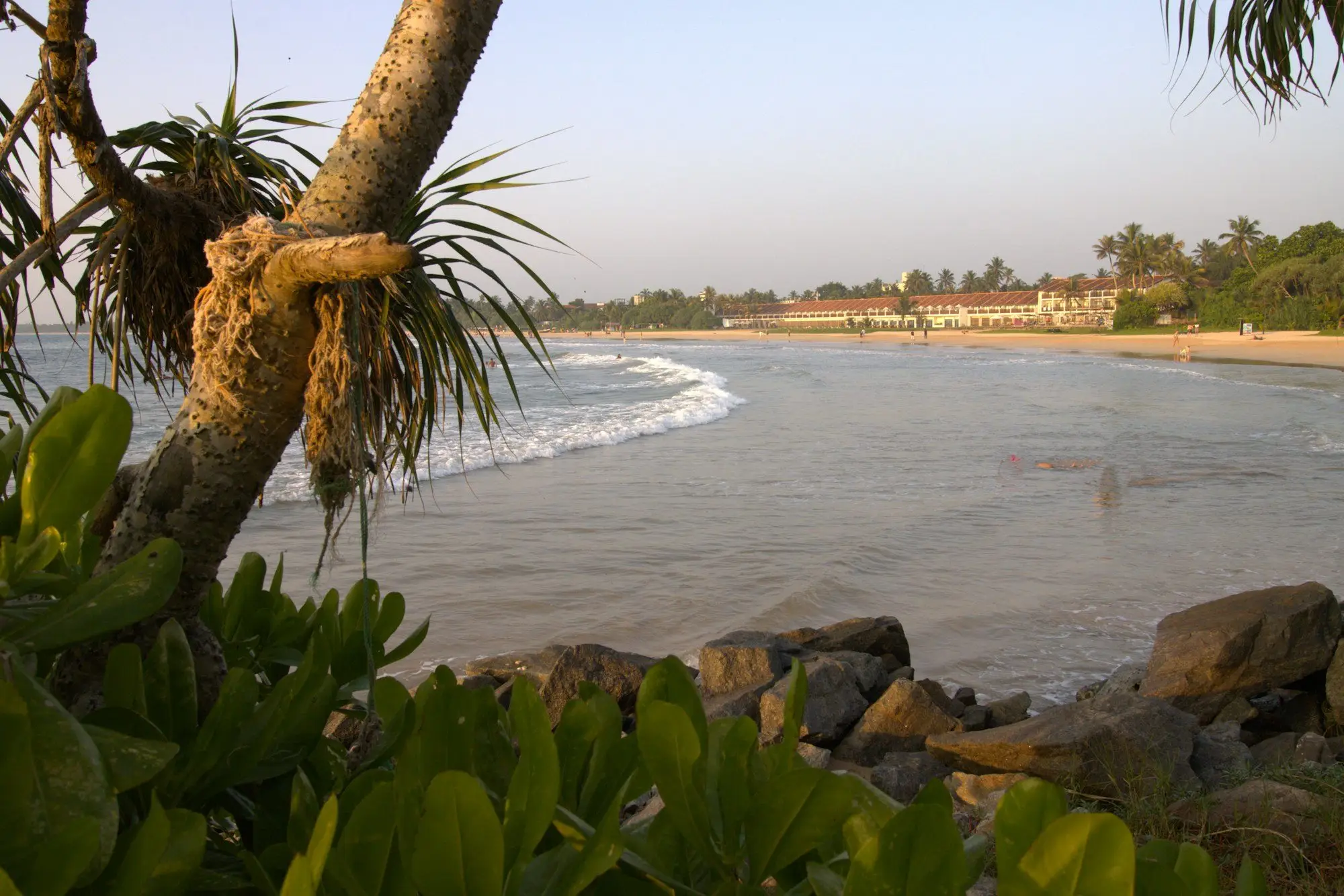
Bentota Travel Guide: River, Beaches & Safari Day Trips
Madu River boat rides, Brief Garden, turtle hatcheries and wide beaches, plus a realistic look at how far Bentota is from Udawalawe and Yala.

Udawalawe National Park Guide: Elephants, Fees & Tips
Plan an Udawalawe safari: elephant herds, morning vs afternoon drives, entrance fees, the Elephant Transit Home and easy trips from Ella or Mirissa.