Udawalawe National Park Guide: Elephants, Fees & Tips
Plan an Udawalawe safari: elephant herds, morning vs afternoon drives, entrance fees, the Elephant Transit Home and easy trips from Ella or Mirissa.


Quick facts
- Best for
- Elephants, families, first safaris
- Best months
- All year
- Elephant odds
- Very likely
- Base town
- Udawalawe town, 10–15 min
- Drive to the gate
- Ella ~2 h 15, Mirissa ~2 h
- Calf feeds (ETH)
- Usually 09:00, 12:00, 15:00, 18:00
On this page
Udawalawe is the park to choose if you want elephants, lots of them, without fuss. Around 250 are thought to live here year-round on open grassland around a big reservoir, so you'll usually meet a herd within minutes of the gate, often with small calves trotting to keep up. It's the easiest first safari in Sri Lanka, great with kids, and it fits neatly into the drive between Ella and the south coast.
Better still for planning, Udawalawe has no annual closure. When Yala's Blocks 1 and 2 shut for a few weeks in September or October, this is the obvious swap. It's about two hours from Ella, Mirissa or Galle, and for seeing elephants in any month, nowhere in Sri Lanka beats it.
Udawalawe at a glance
The park covers about 308 km² on the border of Sabaragamuwa and Uva provinces. It was created in 1972 to give a home to wildlife displaced when the Udawalawe Reservoir was built on the Walawe River, and to protect the reservoir's catchment. The main entrance is on the road east of Udawalawe town towards Thanamalwila, about ten minutes from the village, and the park is open from 06:00 to 18:00 every day.
Why it's Sri Lanka's best park for elephants
It comes down to the landscape. Much of Udawalawe is open grassland, a legacy of old slash-and-burn farming, broken up by scrub, marsh and the shallow edges of the reservoir. There's simply less to hide behind than in Yala or Wilpattu, and with grass and water all year, the elephants stay put.
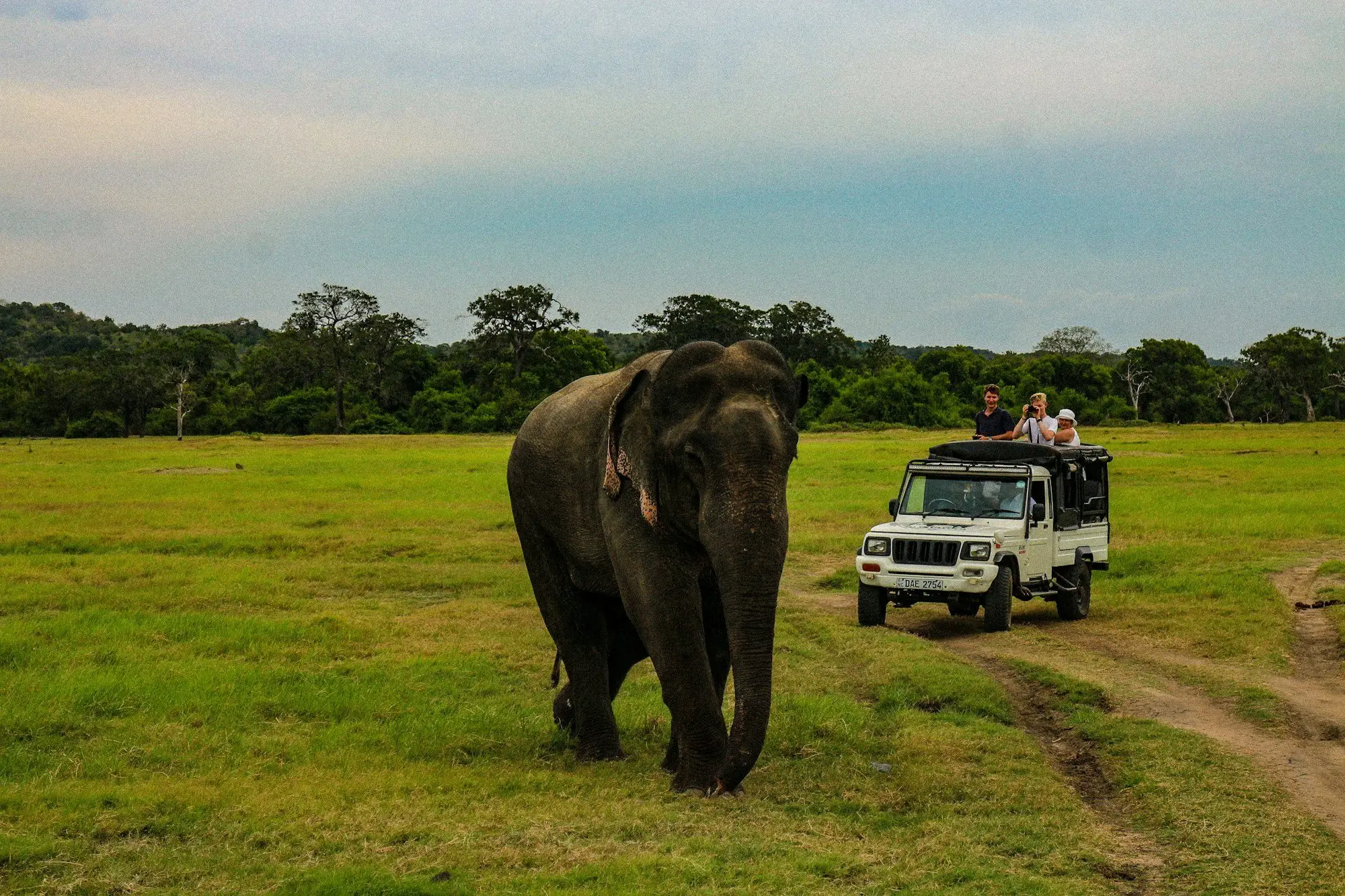
On a typical drive you'll meet family herds grazing, dust-bathing or wading into the water, with calves pressed close to their mothers' legs. Lone bulls wander between the groups. Tuskers are rare everywhere in Sri Lanka, because only a small share of males grow tusks, so treat one as a bonus.
Jeeps do bunch up at a good herd, especially in peak season, but with so many elephants spread across open ground it rarely turns into a Yala-style jam. A good driver will find you a family away from the crowd and switch off the engine. Then you just watch: trunks curling around tufts of grass, ears flapping, a calf trying and failing to climb out of a mud wallow. It's hard to get bored of.
You'll probably see elephants before you even enter. An electric fence runs along the main road past the reservoir, and a few elephants hang around it hoping for handouts from passing cars. Please don't feed them. It teaches them to approach traffic and people, and that rarely ends well for the elephant.
The one serious rival is Minneriya in the Cultural Triangle, where hundreds of elephants gather around the old reservoir late in the dry season, around August and September. We don't run safaris there (yet), but if you're based near Sigiriya at that time of year, it's worth seeing. For the rest of the year, and anywhere in the south, Udawalawe is the elephant park.
Udawalawe vs Yala
It's the question everyone asks, and the answer depends on what you most want to see.
- Elephants: Udawalawe, easily. You'll see more of them, closer, on more drives.
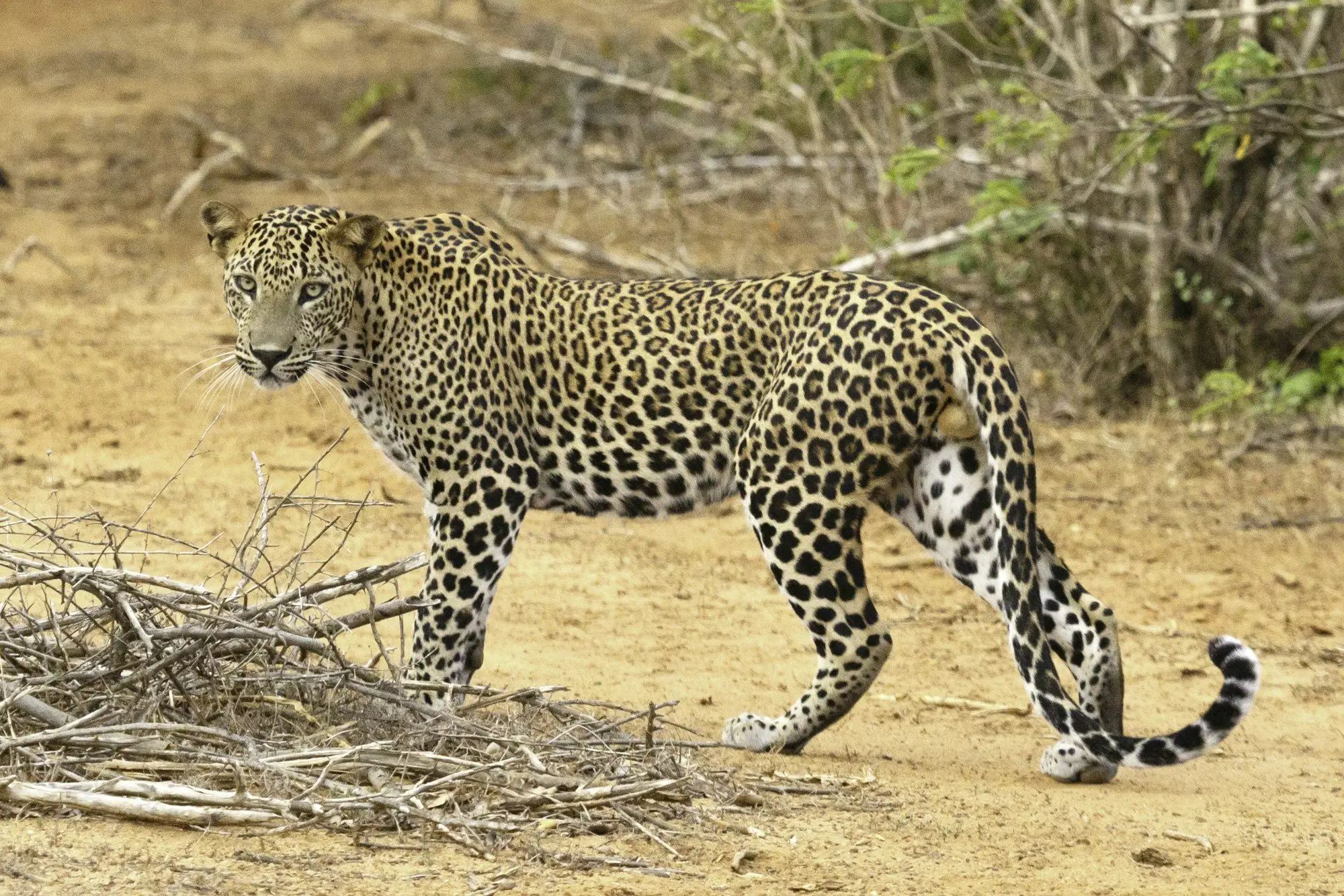
- Leopards: Yala. Udawalawe's leopards are rarely seen, while Yala's are the most visible in the country.
- Crowds: Udawalawe is calmer. It gets busy at peak times, but the open plains spread the jeeps out, so you rarely get the convoys that build up at a Yala leopard sighting.
- Logistics: Udawalawe is a little closer to Ella and the coast, has no annual closure and allows a slightly more relaxed start.
- Scenery and variety: Yala, with its lagoons, rock outcrops and beach.
If you have time for both, do both. If you only have one morning and want the surest big-animal encounter, choose Udawalawe.
Watching elephants the right way
Udawalawe's elephants are mostly relaxed around jeeps, but they're still wild animals, and the best sightings happen when nobody pushes them.
- Give them room. A good driver stops at a respectful distance and lets the elephants decide whether to come closer. Never ask to block a herd's path or get between a mother and her calf.
- Switch off and keep it down. Elephants talk to each other in low rumbles and are sensitive to noise, so a quiet jeep sees more natural behaviour.
- Read the signs. Ears spread wide, a raised trunk or a sudden turn towards the jeep means "too close". Your driver will back off; don't ask them to stay for one more photo.
- Stay in the jeep, and never feed anything, inside the park or at the fence.
Other wildlife and birds
What you might see in Udawalawe
- Asian elephant Very likely Herds with calves on almost every drive.
- Water buffalo Very likely
- Crocodile Likely
- Spotted deer Likely
- Golden jackal Possible
- Leopard If you're lucky
- Sloth bear If you're lucky Very rarely seen.
- Birds incl. eagles & peafowl Very likely
Our honest odds for a single half-day drive in a good season. Wild animals keep their own schedule, so nobody can promise a sighting.
Elephants steal the show, but they're far from alone. Water buffalo wallow in the pools, mugger crocodiles lie motionless on the reservoir banks and spotted deer graze along the edges of the scrub. Golden jackals are a decent possibility, usually trotting down a track early or late in the day. Leopards and sloth bears do live here but are rarely seen, so count either as a lottery win.
Udawalawe is also a great park for birds of prey. Look for crested serpent eagles on dead branches and white-bellied sea eagles over the reservoir, while peafowl strut and display in the grass. More than 180 bird species have been recorded, including the Sri Lanka junglefowl and the Sri Lanka grey hornbill, both found nowhere else, and from roughly October to March migrants from the north add to the numbers. Bee-eaters, kingfishers and painted storks are everyday sights, and the dead trees standing in the reservoir make handy perches for cormorants and darters. Keep an eye on the scrub, too, for toque macaques and the occasional monitor lizard.
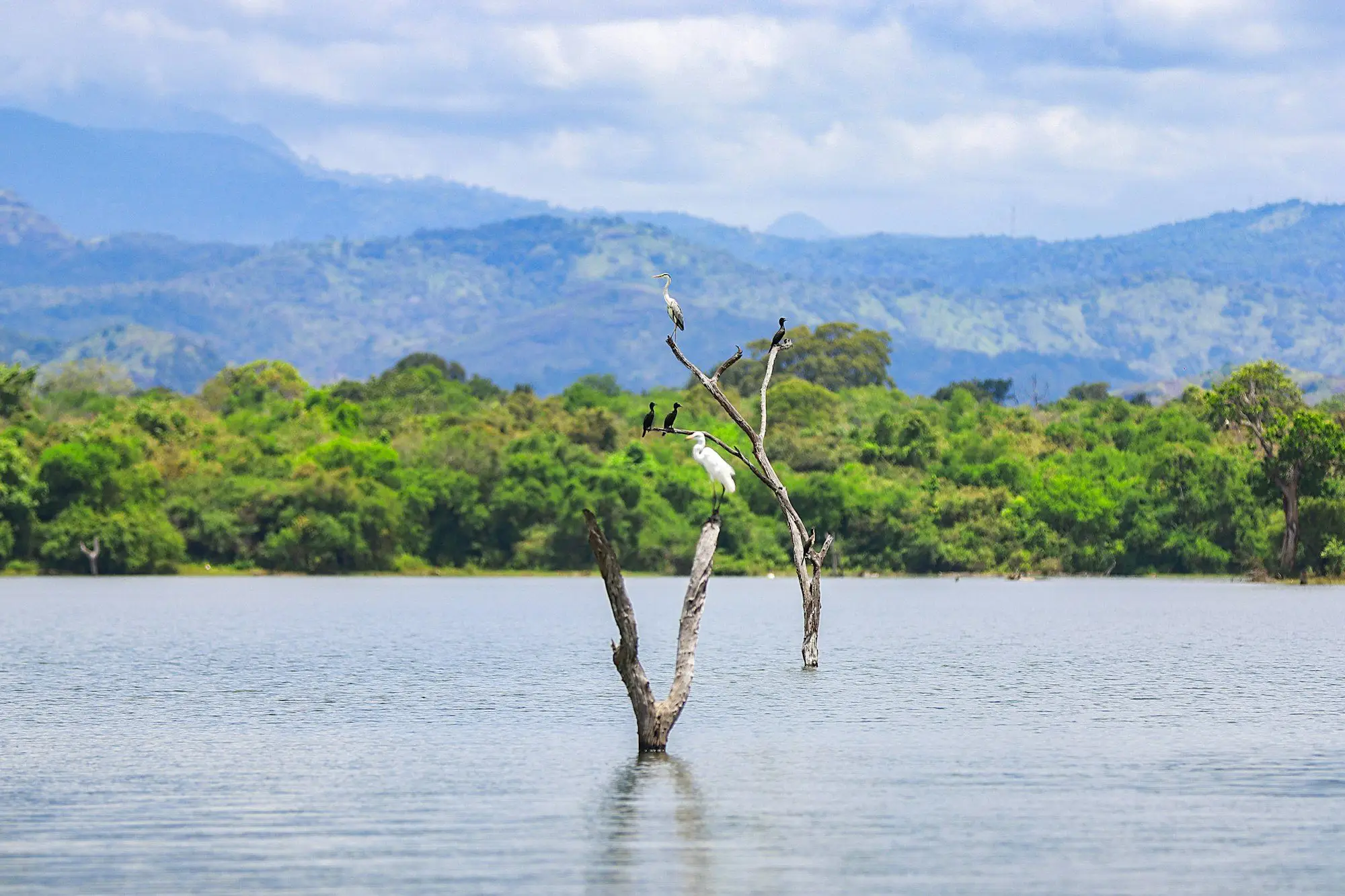
The Udawalawe reservoir, with dead trees standing in the shallows and hills beyond.
Best time to visit
Udawalawe is good all year, which is one of its biggest selling points. The elephants don't migrate away, so there's no bad month to see them. It's warm whatever the month, with average temperatures in the high 20s°C, and the midday sun on an open jeep is fierce. The seasons do change the experience, though:
- January to April and June to September are the drier spells. The grass is shorter, the herds gather near the reservoir and the remaining waterholes, and viewing and photography are at their easiest.
- October to December brings the inter-monsoon and north-east monsoon rains. The park turns green, the dust settles and migrant birds arrive, but expect the odd downpour and some muddy tracks.
- September and October can feel busier than usual in years when Yala's Blocks 1 and 2 close, because many travellers switch here.
Local visitors pile in at weekends, on Poya (full-moon) holidays and during Sri Lankan school holidays, so a weekday drive is usually calmer. For a month-by-month view of all three parks, see our guide to the best time for a safari in Sri Lanka.
Morning or afternoon safari?
Both work here, which isn't true of every park. Because the elephants live out in the open, you'll see them at any time of day; the difference is mostly comfort and light.
- Morning (06:00 to 10:00). Cooler air, softer light, more birdsong and animals on the move. Ideal if you're staying nearby or don't mind a pre-dawn pickup.
- Afternoon (14:30 to 18:00). You can sleep in, check out at a civilised hour and still reach the gate in time. It's hot at the start, but the last hour before closing is golden, and herds often head for water as it cools.
- Longer drives. Six-hour and full-day drives are possible, with no midday closure, which suits photographers and anyone who wants to go beyond the usual loops.
A standard half day is enough for most people, especially with children. The afternoon drive is particularly handy on a travel day, because you can leave the coast or Ella around midday and still reach your next hotel in time for a late dinner.
Whichever you choose, the drive itself follows a similar pattern. You swap into an open-sided safari jeep at the gate, the driver sorts the tickets, and then you bump along sandy tracks through grassland and scrub, down to the reservoir's edge and back. On clear mornings the hill country rises along the northern horizon, which makes for lovely elephant photos.
What to bring:
- Sun protection. A hat, sunscreen and sunglasses; the jeep's canvas roof only helps so much.
- Water and a snack, especially on an afternoon drive.
- A scarf or buff for the dust, and a light layer for an early start.
- Binoculars for the birds. For the elephants, even a phone camera will do; they often come close.
- Some cash for the Elephant Transit Home and a tip.
Entrance fees and real costs
Udawalawe uses the same foreigner fee structure as Yala and Wilpattu: a per-person ticket, a per-jeep charge and 18% VAT. These are the foreigner rates for 2025–26; we confirm the exact amount before you travel.
| Adult | US$25 |
|---|---|
| Child (6–12 years) | US$15 |
| Under 6 | Free |
| Per jeep (service + vehicle fee) | about US$11 |
| VAT on top | 18% |
- 1 adult$42
- 2 adults$72
- 2 adults + 1 child$90
- 4 adults$131
Foreigner rates for 2025–26 as reported by operators and traveller receipts, for one jeep, VAT included. Wild Ceylon estimates always include park tickets, and we confirm the exact amount before you travel.
Tickets are bought at the counter by the main entrance, in cash or, often, by card, or in advance as an e-permit through the Department of Wildlife Conservation's online system, which adds a small convenience fee. In practice your jeep driver usually handles it while you wait.
Jeeps are a little cheaper than at Yala. A private jeep with driver typically costs around LKR 12,000–18,000 (roughly US$36–54) for a half day, and it carries up to six people, so a family or a group of friends can share one. Ask for a driver who's happy to go slowly and switch off the engine at sightings; it makes a real difference.
Budget a few dollars each for the Elephant Transit Home if you're adding it, and a tip for your jeep driver if they've looked after you well. Every Wild Ceylon estimate includes the car, the private jeep and the park tickets, so the only extras on the day are the ETH ticket, food and any tip.
The Elephant Transit Home: feeding times and tips
The Elephant Transit Home (ETH) is a rescue and rehabilitation centre, run by the Department of Wildlife Conservation since 1995. It takes in orphaned and abandoned calves from around the country, raises them and releases them back into protected areas once they can fend for themselves, usually at about five years old. That release is what sets it apart from places that keep elephants captive for rides or bathing shows, which we'd steer you away from. Here there's no touching and no riding: you watch from a viewing area behind a barrier.
Most calves arrive after being separated from their herds, often in places where farmland and elephant country overlap. Keeping contact with people to a minimum is deliberate, because the aim is wild elephants that can survive without humans, not tame ones.
The calves are fed every three hours, and four feeds are open to visitors:
- 09:00
- 12:00
- 15:00
- 18:00
Some sources list different times (10:30, 14:30 and 18:00 have also been quoted), so confirm on the day. Each feed lasts about 20–30 minutes. A line of hungry calves is led in, gulps down milk from the keepers and then wanders off to browse. Expect chaos, and a lot of charm.
The ETH sits near Udawalawe town, a few kilometres west of the park entrance. That puts it on your way if you're heading to the south coast after a safari, and a short detour if you're going up to Ella. Tickets cost a few dollars, and a visit takes 20 to 40 minutes.
Getting there from Ella, Mirissa and Colombo
Driving to Udawalawe: Main entrance (A18, Thanamalwila road)
| From | Drive | Morning pickup | Afternoon pickup |
|---|---|---|---|
| Udawalawe town | 15 min · 9 km | 05:30 | 14:00 |
| Ella | 2 h 15 · 91 km | 03:30 | 12:00 |
| Mirissa | 2 h · 108 km | 03:45 | 12:15 |
| Tangalle | 1 h 30 · 70 km | 04:15 | 12:45 |
| Galle | 2 h 15 · 132 km | 03:30 | 12:00 |
| Colombo | 4 h · 160 km | too early | 09:30 |
Door-to-gate times with normal traffic, rounded to 15 minutes. Tap a town to plan from there.
From Ella, it's about 2¼ hours, down through the Ella Gap to Wellawaya and then west across the plains via Thanamalwila. A morning drive means a pickup at around half past three, while the afternoon session lets you leave Ella around noon. Our Ella travel guide covers how to fit it around the hikes and the train.
From Mirissa, Weligama and the south coast, it's about two hours, less from Tangalle and Hiriketiya, and about 2¼ hours from Galle and Unawatuna. That makes Udawalawe the most practical safari day trip from the coast, morning or afternoon, and the natural stop if you're travelling between the beaches and Ella in either direction.
It's also the closest of the three parks to the west-coast resorts: about 2¾ hours from Hikkaduwa and 3 hours from Bentota. That's a long day and a very early start for the morning drive, but it works, especially if you continue on to Ella or a south-coast beach afterwards rather than going back.
From Colombo, it's about four hours, too far for a morning drive. Either leave after breakfast for the afternoon session and stay nearby, or build it into a one-way day that ends in Ella or on the coast.
You can also pair Udawalawe with Yala. Tissa is about 1½ hours away, so an afternoon here and a morning in Yala the next day makes a good two-park trip.
One of the easiest ways to do Udawalawe is on the move from the beach up to the hills:
You're in the park by six, out by ten and having lunch on the road. By early afternoon you're in Ella, with time to walk up Little Adam's Peak before sunset. Run it the other way, from Ella to the coast, and you'll be on the beach by about 1 pm.
Without a private car, it's still doable. Buses run from Ella with a change at Wellawaya or Thanamalwila, and from the south coast via Embilipitiya; they're cheap but slow, so allow plenty of time. Guesthouses in Udawalawe town can arrange a jeep to collect you for the safari.
Where to stay
You don't have to stay near Udawalawe; most people visit on a day trip or a travel day. A night here makes sense if you want both an afternoon and a morning drive, or if you're breaking a long journey. A good overnight plan is an afternoon drive on arrival, a morning drive the next day, then the noon feed at the Elephant Transit Home before you move on.
Udawalawe town is a small, spread-out village by the reservoir dam, about ten minutes from the park entrance. There's a good choice of guesthouses and mid-range safari lodges, many of which arrange jeeps, and the ETH is on the doorstep. Don't expect nightlife; do expect to fall asleep to a chorus of frogs.
On the road towards the park, a few more lodges sit closer to the gate. They tend to cost a bit more and save you a few minutes in the morning.
Embilipitiya, the nearest big town, lies to the south. It's a busy market town with banks and supermarkets, handy for errands but less charming.
If you'd rather wake up by the sea, stay in Tangalle or Hiriketiya instead. They're only about 1½ to 1¾ hours from the gate, close enough for a morning drive with a start around 4 am.
For all-in prices from your pickup town, see our Udawalawe safari page, and if you're still choosing between parks, the three-park comparison lays out the trade-offs side by side.
Good to know
Will I see elephants in Udawalawe?
Very likely. Around 250 elephants are thought to live in the park year-round, and herds with calves turn up on almost every drive, though nobody can guarantee wildlife.
What are the Elephant Transit Home feeding times?
Usually 09:00, 12:00, 15:00 and 18:00, with each feed lasting about 20–30 minutes. The times have changed before, so confirm locally on the day.
Is Udawalawe or Yala better?
Udawalawe for elephants, fewer jeeps and an easier day; Yala for leopards and more variety. Udawalawe is also open all year, so it's the natural swap when Yala's Blocks 1 and 2 close in September or October.
Should I do a morning or afternoon safari in Udawalawe?
Both work well, because the elephants live out in the open and are easy to see all day. Mornings are cooler with softer light; afternoons let you sleep in and finish at sunset.
Can I stop at Udawalawe between Ella and the beach?
Yes, and it's one of the neatest ways to fit it in. A morning drive with a pickup around half past three in Ella gets you to Mirissa at about 1 pm, or take the afternoon drive and arrive in the evening.
Is Udawalawe good for children?
Very. The plains are open, big animals appear quickly and the drive from the coast or Ella is shorter than to Yala. Children aged 6–12 pay a reduced park fee, and under-6s go free.
Turn the drive into a safari day
We pick you up where you're staying, stop at the park and take you on to your next stop. Private car, private jeep, park tickets: one all-in estimate, sent on WhatsApp. No deposit, pay on the day.
Mirissa toKeep planning
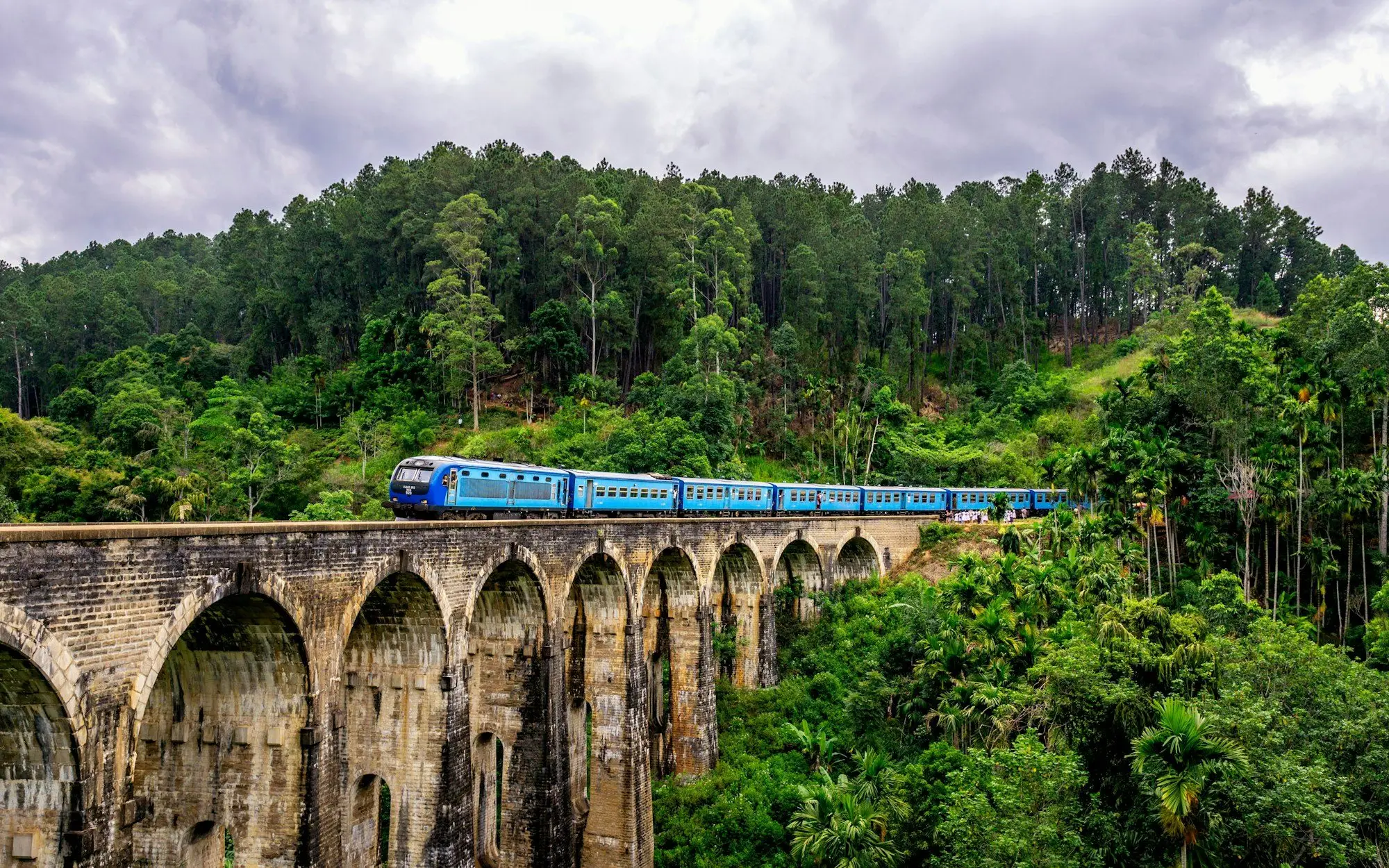
Ella Travel Guide: Things to Do, Stays & Safari Trips
Nine Arch Bridge, Little Adam's Peak, the famous train and more, plus how to add a Yala or Udawalawe safari on your way from Ella to the coast.

Yala National Park Guide: Leopards, Blocks & Best Time
Before your Yala safari: leopard odds, Block 1 vs Block 5, fees, safari timings, the usual Sep–Oct closure and how to avoid the jeep jams.
Ella to Mirissa via Yala or Udawalawe: Safari on the Way
How the Ella to Mirissa safari transfer works: Yala vs Udawalawe, timings, luggage, all-in costs and the reverse trip from Mirissa to Ella.