Minneriya National Park Guide: The Gathering, Fees & Tips
When Minneriya's elephant Gathering happens and why it can fail, Kaudulla and Hurulu next door, crowds, fees and easy trips from Sigiriya, Kandy or Trinco.


Quick facts
- Best for
- Big elephant herds, water birds
- Best months
- Jul–Oct, peak Aug–Sep
- Elephant odds
- Very likely Jul–Oct
- Best session
- Afternoon, 14:30–18:00
- From the gate
- Habarana ~15 min, Sigiriya 30–45 min
- Next door
- Kaudulla and Hurulu Eco Park
On this page
- Minneriya at a glance
- The Gathering: when it happens, and why it can fail
- Following the herds: Minneriya, Kaudulla and Hurulu
- What you'll see
- Morning or afternoon?
- Crowds, and a kinder safari
- Entrance fees and what a safari costs
- The hotel pickup: no car needed
- Getting there from Kandy, Trincomalee and Colombo
- Where to stay
Minneriya is the place to see elephants in numbers. For a few months each year, as its ancient reservoir shrinks in the dry season, fresh grass grows on the exposed bed and herds walk out of the forest to graze, sometimes in their hundreds. It's known as the Gathering, it usually peaks in August and September, and on a good afternoon it's an extraordinary sight.
It's also the easiest safari in the Cultural Triangle: about 15 minutes from Habarana and 30 to 45 from Sigiriya or Dambulla, with the drive in the afternoon, so nobody needs a 3 am alarm. The catches are that everyone else knows about it too, and that the herds move with the water. They use Minneriya, Kaudulla next door and Hurulu Eco Park, and this guide explains how we follow them, when to go, and how to have a good afternoon despite the crowds.
Minneriya at a glance
Minneriya National Park covers about 89 km² in Polonnaruwa District, in the North Central Province. Its heart is the Minneriya tank, a reservoir built by King Mahasena in the third century AD and still fed by an ancient canal from the Amban Ganga. Around the water you'll find grassland, scrub and dry forest, with rocky outcrops and marshes. The area was a wildlife sanctuary from 1938 and became a national park in 1997, partly to protect the tank's catchment.
The main entrance and ticket office are on the A11 Habarana–Polonnaruwa road, about 9 km east of Habarana, and the park is open from 06:00 to 18:00 every day, with no annual closure.
The Gathering: when it happens, and why it can fail
Sri Lanka's elephants don't migrate across the country. They keep to their home ranges, and the herds around Minneriya simply move between the reservoirs and forests nearby, wherever the grass and water are best. The Gathering is what happens when one of those places becomes irresistible.
Through the wet season, the reservoir is full and its bed is under water. From around May the water is drawn down for the dry-season crops and evaporates in the heat, and as it falls, fresh grass sprouts on the newly exposed ground. The herds follow the grass, and by August and September family groups, calves and wandering bulls can spread across it together. When the reservoir starts to refill, usually in October, most of them move on, often to Kaudulla, whose tank runs about a month behind.
Month by month, it usually goes like this:
- January to April: the reservoir is full and its bed under water. Herds are smaller and scattered, and Hurulu Eco Park is often the better bet.
- May and June: the water drops and the first herds return.
- July: the herds build up.
- August and September: the peak in most years, and the peak for jeeps too.
- October: the reservoir refills and the herds usually cross to Kaudulla.
- November: Kaudulla's tank fills last, so its herds often stay into the month. Storms can close the parks for a few days.
- December: the north-east monsoon has filled every tank, and the herds spread out into the forests, often towards Hurulu.
Mid-October 2026 shows how it works. Minneriya's reservoir had filled to almost 60% while Kaudulla's was still unusually low, the usual cue for the herds to cross over. That's why we never sell a fixed park: we check every evening, and we tell you.
Why it can fail
The Gathering depends on the reservoir falling. After the Moragahakanda reservoir upstream opened in 2018, water heading north through Minneriya kept the tank high in the dry season, and the grass stayed flooded. Monthly counts by a former head of the wildlife department show what that meant: 402 elephants on one day in September 2017, and only about 20 a day in September 2021, when the tank was almost full. By late July 2024 the count was back to 187 a day.
In late 2025, in a case brought by the Wildlife and Nature Protection Society, the irrigation authorities undertook in the Court of Appeal to keep the reservoir's natural rise and fall. That should help. And 2026 was a dry year, with the reservoir low through August and September and big herds reported, although nobody has published a count.
Following the herds: Minneriya, Kaudulla and Hurulu
Minneriya shares its elephants with two neighbours. Kaudulla National Park, built around another of King Mahasena's reservoirs, lies about half an hour north of Minneriya's gate, and a protected forest corridor links the two. Hurulu Eco Park is a stretch of forest and grassland just outside Habarana, run by the Forest Department rather than the wildlife department and part of a UNESCO biosphere reserve. All three are one connected elephant range, and local jeep drivers move between them as the herds do. They're usually right to.
The trouble is how it's done. A common complaint about safaris here is being driven to a different park without being told, or paying Minneriya prices at cheaper Hurulu. So here's how we do it:
- The evening before your safari, we check with the jeep drivers where the herds have been and message you our pick: Minneriya, Kaudulla or Hurulu.
- You decide. If you'd rather stay with Minneriya whatever happens, that's what we do.
- The jeep costs the same in all three parks.
- You pay the gate price of the park you enter. Kaudulla's tickets cost the same as Minneriya's. Hurulu's cost much less, and you pay only what its gate charges.
- We never switch parks without asking you first.
Kaudulla is usually best from about September to November, as Minneriya refills and the herds cross over. It's often a little quieter than Minneriya, though it has its own queues at the peak. The gate is off the road from Minneriya to Gal Oya junction, north-east of Habarana: about 45 minutes to an hour from Sigiriya, and about 1¾ hours from Trincomalee, the closest of the three to the east coast. Don't confuse that Gal Oya junction with Gal Oya National Park, which is in the east, near Ampara.
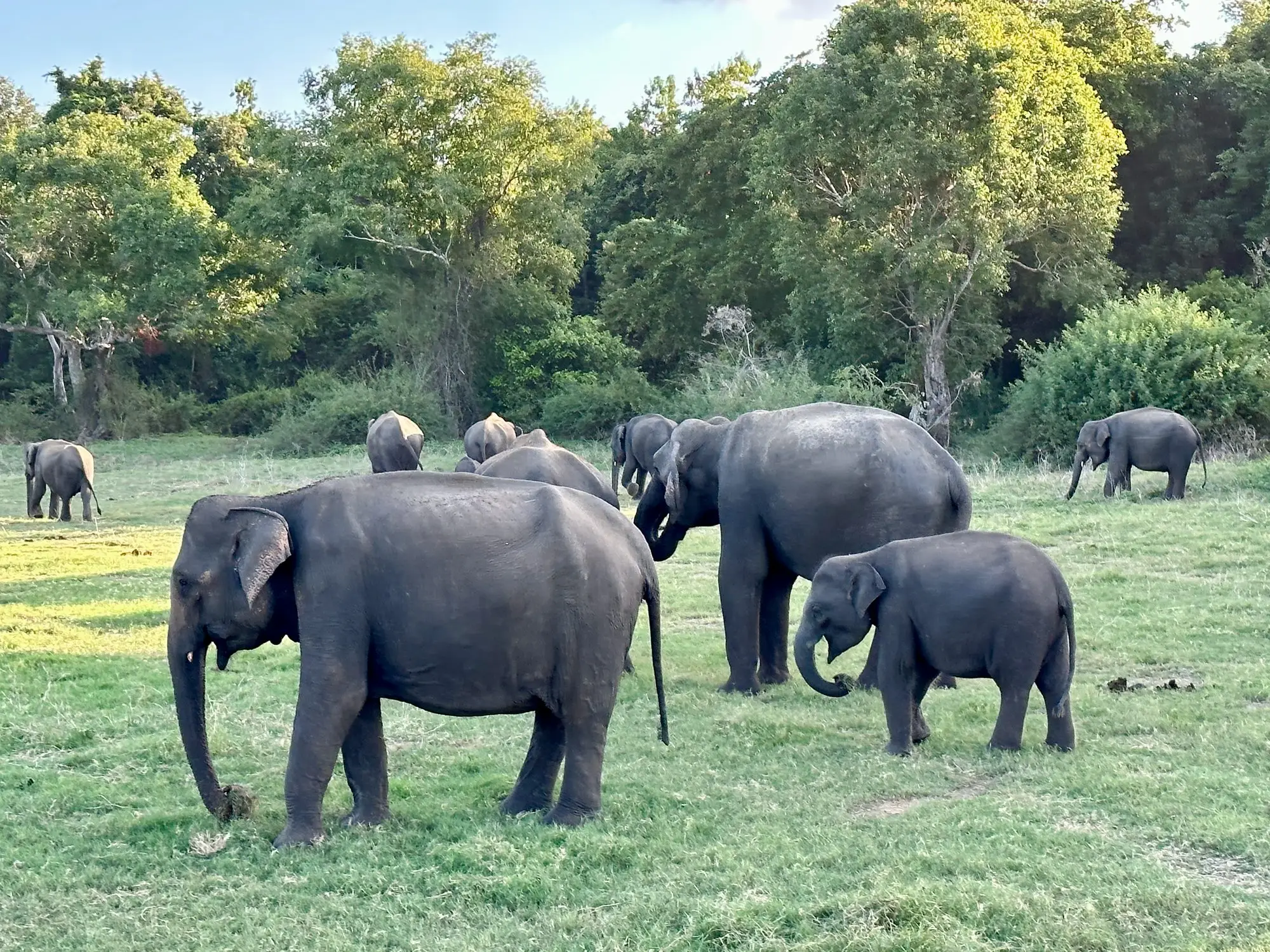
An evening herd at Kaudulla, where the elephants usually move once Minneriya's reservoir starts to refill.
Hurulu is the forest fallback. It's at its best when the big reservoirs are full, roughly November to April, and on days when Minneriya and Kaudulla are flooded or jammed. The forest is thicker than on the reservoir beds, so you'll spend more time looking between trees than across open grass. It usually keeps shorter hours than the national parks, about 07:00 to 17:00 (sources differ), so a drive there starts and finishes a little earlier, and we'll confirm the timings with our pick.
What you'll see
What you might see in Minneriya
- Asian elephant Very likely From July to October, when we follow the herds between Minneriya and Kaudulla, and often into November at Kaudulla. From December to June the herds are smaller and spread out: likely rather than very likely.
- Water birds (cormorants, egrets, storks, pelicans) Very likely
- Spotted deer Likely
- Water buffalo Likely
- Toque macaques and grey langurs Likely
- Mugger crocodile Possible Easiest along the water in the dry season.
- Sambar deer Possible
- Leopard If you're lucky Present, but rarely seen.
- Sloth bear If you're lucky Present, but very rarely seen.
Our honest odds for a single half-day drive in a good season. Wild animals keep their own schedule, so nobody can promise a sighting.
Elephants are the reason to come, and on a good afternoon you'll watch them do everything: graze in long lines, throw dust over their backs, wade into the shallows and keep the calves close. Sri Lanka's elephants are a subspecies of their own, and more than nine in ten bulls have no tusks, so a tusker here is a rare bonus.
The reservoir also makes Minneriya a superb park for water birds. More than 160 species have been recorded here, and flocks of little cormorants can run into the hundreds. Look for painted storks, spot-billed pelicans, egrets and the lesser adjutant, a big, bald-headed stork, and from about October migrant waders join them. Spotted deer, water buffalo and toque macaques are likely, and a mugger crocodile at the water's edge is possible. Leopards and sloth bears live here, but they're very rarely seen.
Morning or afternoon?
At most parks the morning wins. Minneriya is the exception.
- Afternoon (14:30 to 18:00). The one to book. The first herds usually leave the tree line after about half past three, and by five the grass can be dotted with families. The light is harsh at first, then turns golden as the sun drops. Every jeep has to be out of the park by 6 pm sharp, and in season the ticket queue can take up to two hours, so we aim to reach the gate by 2 pm.
- Morning (06:00 to about 09:30). Cooler, calmer and the best time for birds, with far fewer jeeps. Few elephants are out on the grass, though, and those that are drift back into the shade as the sun climbs. Worth it if birds matter more to you than herds, or as a second drive.
- Full day (06:00 to 18:00). Possible, but rarely worth it: the midday heat sends the herds into the forest, and the afternoon shows you the most anyway.
What to bring:
- Sun protection. A hat, sunscreen and sunglasses; the afternoon sun is fierce until about four.
- Water and a snack, because the queue can be long.
- A scarf or buff for the dust on the tracks.
- Binoculars for the birds, and a light rain jacket from October to January.
- Some cash for a tip.
Crowds, and a kinder safari
Let's be straight about it: in August and September, Minneriya is busy. Officials put the traffic into Minneriya and Kaudulla at 400 to 600 jeeps a day in August 2026, the queues at the two ticket counters could take up to two hours, and some reviews from that month describe more jeeps than elephants. A study of how many vehicles the parks can take, and a second entrance near Sigiriya, have been proposed, but neither exists yet.
Crowded herds get stressed. In 2025, a driver-training programme run with elephant researchers reported jeeps crowding herds closely enough that elephants sometimes charged, and told drivers to switch to Kaudulla or Hurulu when Minneriya is jammed. That's part of why we follow the herds.
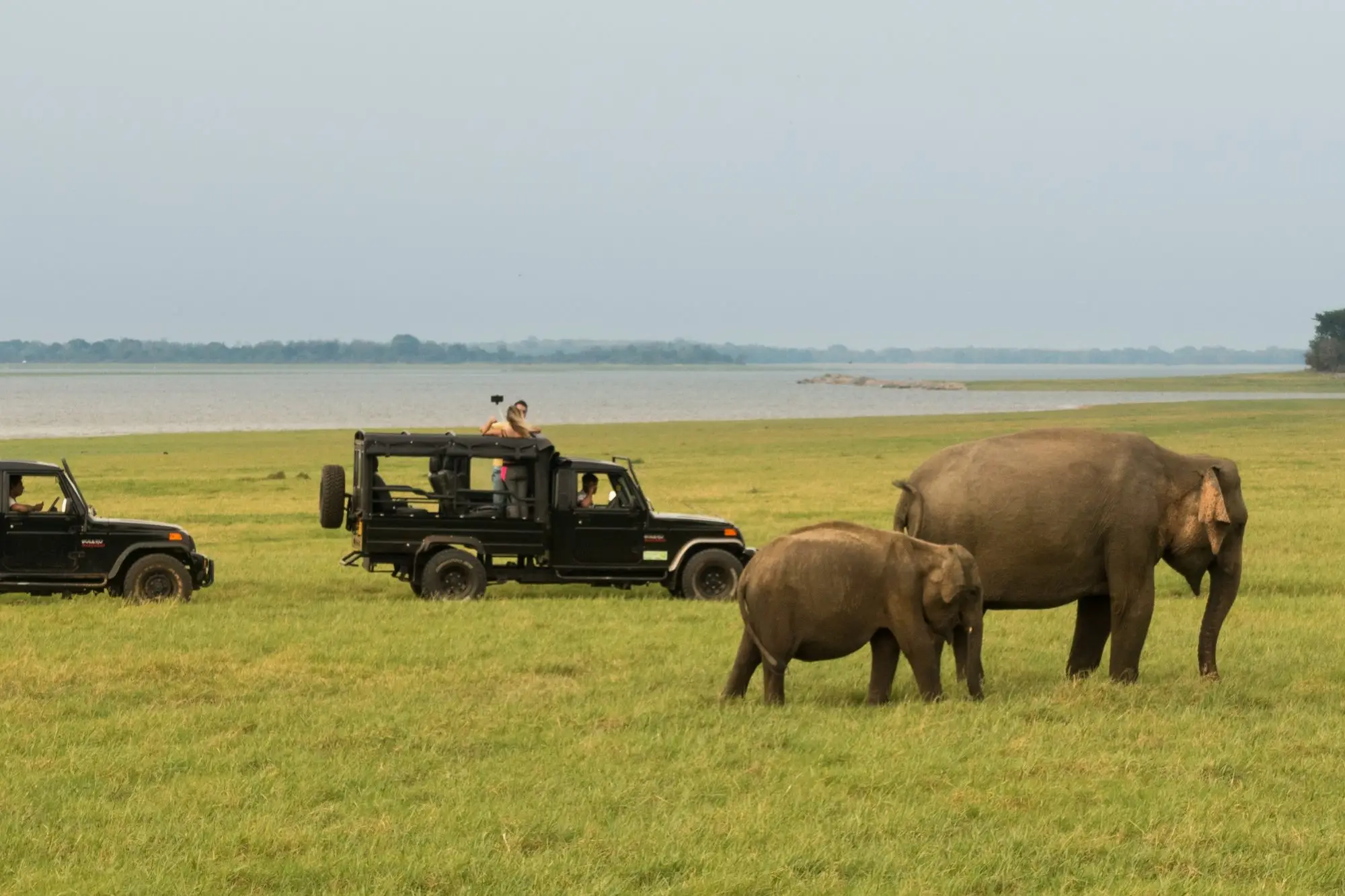
Two jeeps with a mother and calf on the reservoir bed. In August and September, expect many more.
Since 2019, every safari jeep driver at Minneriya and Kaudulla has needed a certificate from the wildlife department and the tourism authority, and in 2023 the department moved to arrest two drivers filmed harassing elephants here and bar their jeeps from the parks. A good driver makes all the difference, and you can help:
- Ask your driver to keep back and switch off. The best sightings are the ones where the herd carries on as if you weren't there.
- Never block a herd's path, squeeze between a mother and her calf or join a ring of jeeps around a group. If it turns into a scrum, move on.
- Read the warning signs. Ears spread wide, head up, a raised or swinging trunk, or a sudden turn towards the jeep mean you're too close. Back off, and don't ask for one more photo.
- Give bulls in musth a wide berth. You'll know them by a dark stain running down the cheek from a swollen gland between the eye and the ear. They can be unpredictable.
- Never feed an elephant, in the park or on the roads around Habarana and Polonnaruwa, where some have learnt to wait for handouts. It's illegal, and it teaches them to approach traffic, which ends badly for elephants and people alike.
- Stay in your seat and keep quiet. Getting out of the jeep is against park rules, and a quiet jeep sees more. Take your rubbish home, too.
Entrance fees and what a safari costs
Minneriya and Kaudulla have the same official fees as Yala, Udawalawe and Wilpattu, set in US dollars. Each gate charges them in rupees at its own rate. The table below shows the fees and when we last checked them.
| Adult | US$25 |
|---|---|
| Child (6–12 years) | US$15 |
| Under 6 | Free |
| Per jeep (service + vehicle fee) | about US$11 |
| VAT on top | 18% |
- 1 adult$42
- 2 adults$72
- 2 adults + 1 child$90
- 4 adults$131
Official fees, checked with the wildlife department's fee calculator on 2 November 2026, for one jeep, VAT included. Gates charge them in rupees at their own rate. Wild Ceylon estimates always include park tickets, and we confirm the exact amount before you travel.
Hurulu Eco Park is the exception. As a Forest Department park it has its own, much lower tickets: about a fifth of the price for two adults, going by its January 2025 schedule. If Hurulu is the park you choose, you pay its gate price instead, and the difference stays with you.
Jeeps here are sold every way you can imagine: per person, per jeep, with or without tickets, and with a hotel pickup or without. On the open market a half-day jeep with driver costs roughly LKR 8,000–12,000 (about US$24–36) at a Habarana jeep stand, or about US$30–45 from operators who collect you from your hotel, and some charge extra for Kaudulla. Ours costs the same in all three parks, and our Minneriya page shows it. Every Wild Ceylon estimate includes the jeep and the park tickets, plus our car whenever you need one, so the only extras on the day are food, tips and any entry tickets at stops on the way.
The hotel pickup: no car needed
If you're staying in Sigiriya, Habarana, Dambulla or Polonnaruwa and coming back to the same hotel, you don't need a car at all. The jeep collects you from your hotel, drives you to the park and brings you back.
Pickup is in the early afternoon, and you're back in time for dinner. If the herds are at Kaudulla, about 45 minutes to an hour from Sigiriya, we'll confirm the pickup time when we message you the evening before. Add a stop on the way, such as the Dambulla cave temple, or a drop-off somewhere else the same evening, and our car takes you to the park and on instead.
Getting there from Kandy, Trincomalee and Colombo
Driving to Minneriya: Main entrance (A11, Habarana–Polonnaruwa road)
| From | Drive | Morning pickup | Afternoon pickup |
|---|---|---|---|
| Sigiriya | 45 min · 20 km | 05:00 | 13:15 |
| Anuradhapura | 1 h 30 · 66 km | 04:15 | 12:30 |
| Trincomalee | 2 h 15 · 94 km | 03:30 | 11:45 |
| Kandy | 2 h 30 · 103 km | 03:15 | 10:45 |
| Colombo Airport (BIA) | 4 h · 159 km | too early | 09:15land by 08:15 |
| Colombo | 4 h 15 · 181 km | too early | 09:00 |
Door-to-gate times with normal traffic, rounded to 15 minutes. Tap a town to plan from there.
From Kandy, it's about 2½ hours north through Matale and Dambulla. A morning drive would mean leaving around 3 am, so take the afternoon: leave Kandy late in the morning, have lunch on the way and spend the afternoon with the herds. Then, rather than driving back to Kandy in the dark, carry on to Sigiriya, 45 minutes away, and the safari becomes part of a journey you were making anyway:
From Trincomalee, Minneriya is about 2¼ hours away and Kaudulla about 1¾. An afternoon drive on your way to Sigiriya works neatly. Heading the other way, from Sigiriya to the coast, the afternoon drive gets you to Trinco at about half past eight, on the Habarana–Trincomalee road after dark, when wild elephants cross it, so your driver will take it slowly. If you'd rather reach the beach by lunchtime, with the Habarana road in daylight, take the morning drive instead, and accept fewer elephants in the open. Our Trincomalee guide has more.
From Anuradhapura, it's about 1½ hours: an easy afternoon on the way to Sigiriya, or a longer day on to Trincomalee.
From Colombo, Negombo or the airport, it's about four hours or a little more. Leave after breakfast for the afternoon drive and finish in Sigiriya: it turns the long haul to the Cultural Triangle into a safari day. Straight off an overnight flight it's a lot, so most people are happier sleeping near the airport first.
From Ella and the south coast, it's five hours or more. Down there, Udawalawe is the elephant park, and it's good in any month: our Udawalawe guide explains why.
Where to stay
Habarana is the closest town, about 15 minutes from the gate, and the jeep drivers' hub: a junction town with big resort hotels and smaller guesthouses, on the roads to both Polonnaruwa and Trincomalee. Sigiriya puts you between Lion Rock and Pidurangala, 30 to 45 minutes from the gate, with the widest choice of guesthouses and lodges. Dambulla is a little further out. And Polonnaruwa, about 45 minutes from the gate, works well if you'd like to cycle round the ancient city in the morning and watch elephants in the afternoon. The hotel pickup covers all four towns; staying out at Kandalama, ask us. Our Sigiriya and Dambulla guide has more on each.
Wherever you stay, don't walk or cycle on unlit roads after dark: wild elephants cross them.
For all-in prices from your town, see our Minneriya safari page. And if you're still deciding where to see elephants, our guide to where to see wild elephants in Sri Lanka compares every park, month by month.
Good to know
When is the elephant Gathering at Minneriya?
Usually from July to October, at its best in August and September, as the reservoir drops and grass grows on its bed. Once the water starts rising again, usually in October, the herds tend to move to Kaudulla next door. It depends on the water every year, so it's never guaranteed.
How many elephants will I see?
Nobody can promise a number. On a good afternoon in August or September you may see dozens, and in the best years hundreds gather at once: 402 were counted on one day in September 2017. When the reservoir was kept full in 2021, only about 20 a day turned up. Outside the season, expect smaller family groups.
Minneriya, Kaudulla or Hurulu: which is best?
Whichever the herds are using that week. Minneriya is usually best in August and September, Kaudulla from about September to November, and Hurulu Eco Park when the big reservoirs are full, roughly November to April. The evening before your safari we'll tell you which looks best, and you choose.
Is a morning or afternoon safari better at Minneriya?
The afternoon. The herds are out on the grass from mid-afternoon until dusk, and every jeep has to leave by 6 pm. A morning drive is cooler and better for birds, but you'll see fewer elephants in the open.
Do I need a car from Sigiriya or Habarana?
Not for a round trip. From a hotel in Sigiriya, Habarana, Dambulla or Polonnaruwa, the jeep itself picks you up and drops you back, so the jeep is the only vehicle you pay for. You need our car only for a stop on the way, or to end the day somewhere else.
Can I visit Minneriya from Kandy or Trincomalee?
Yes, as an afternoon drive: the gate is about 2½ hours from Kandy and 2¼ hours from Trinco, and Kaudulla is a little closer to Trinco. Better still, make it a one-way day and finish in Sigiriya, about 45 minutes from the gate.
Is Minneriya good for children?
Yes, with a little planning. There's no pre-dawn start, and big animals are easy to see on the open grass. In August and September, though, the ticket queue and the afternoon heat can test small children. Children aged 6–12 pay a reduced park fee, and under-6s go free.
A safari day from your hotel
Staying near Minneriya? The jeep collects you from your hotel and brings you back. Heading somewhere else afterwards? Our private car takes you on. One all-in estimate, sent on WhatsApp. No deposit, pay on the day.
Sigiriya toKeep planning
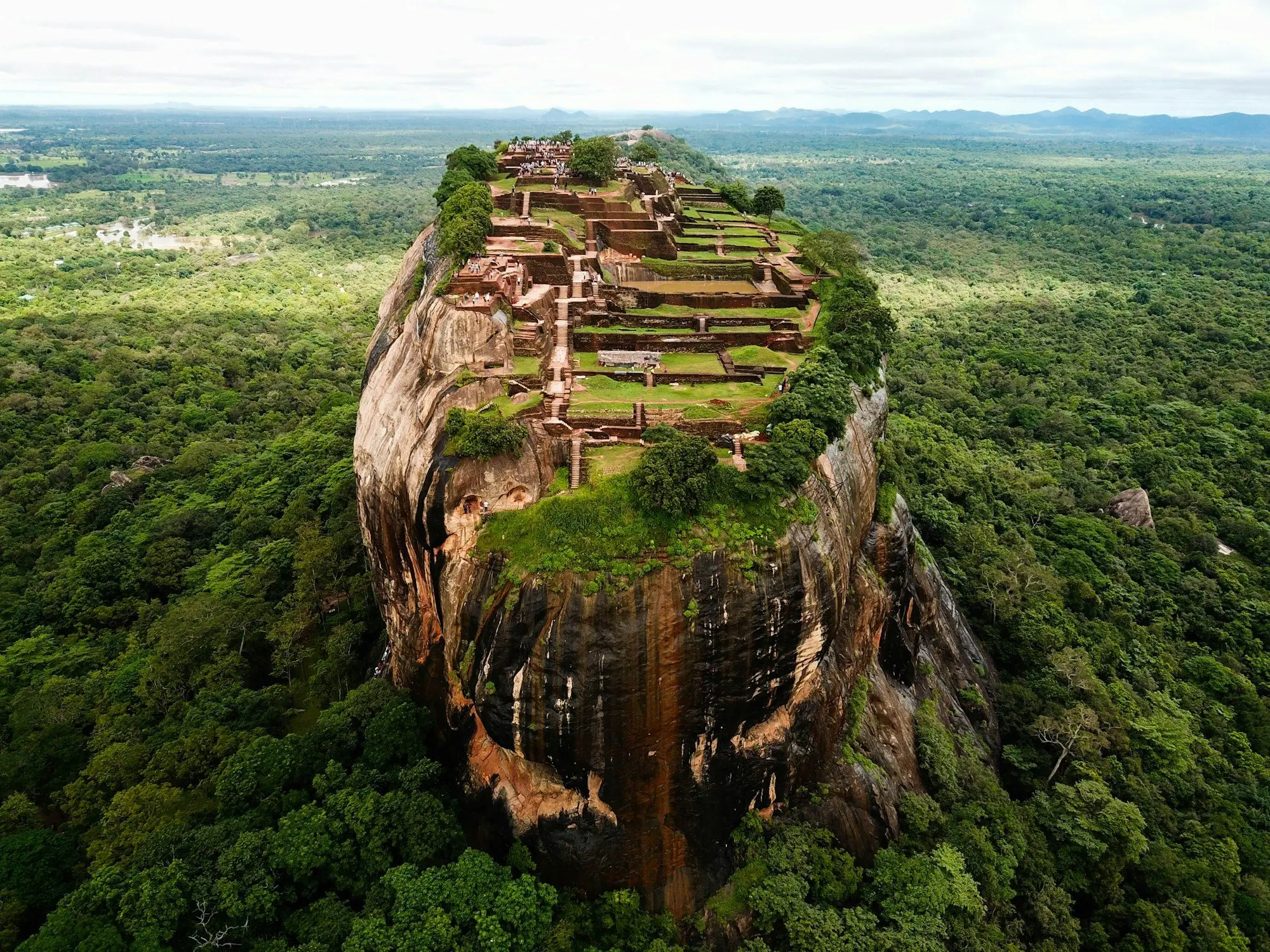

Sigiriya & Dambulla Guide: Rocks, Caves & Elephant Safaris
Climb Sigiriya or Pidurangala at sunrise, see the Dambulla cave temples, and add a Minneriya elephant safari, or a Wilpattu leopard day on your way out.
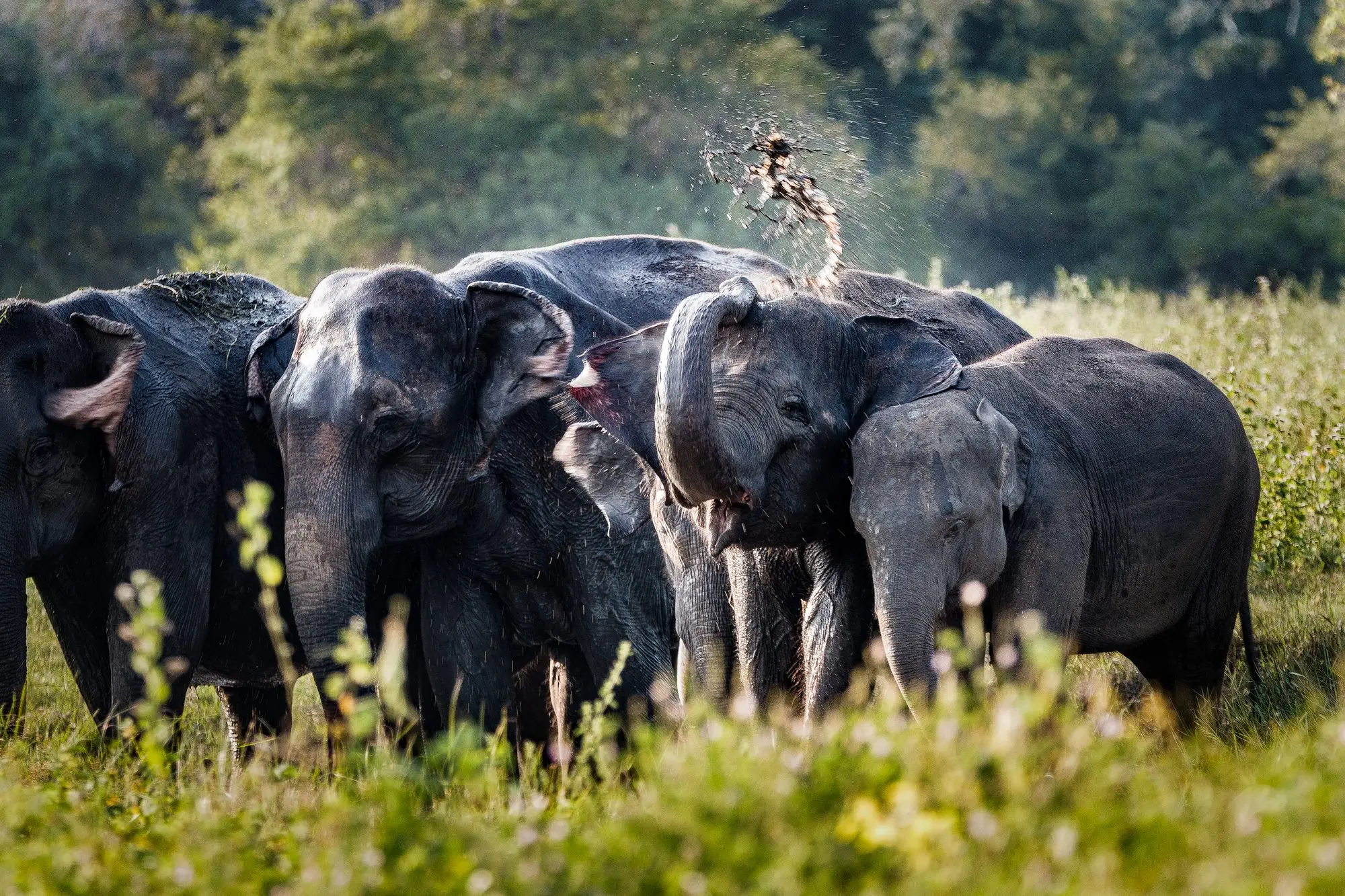

Where to See Wild Elephants in Sri Lanka, Month by Month
Minneriya or Udawalawe? Where wild elephants are easiest to see each month, with honest notes on crowds, costs, drive times and what to skip.
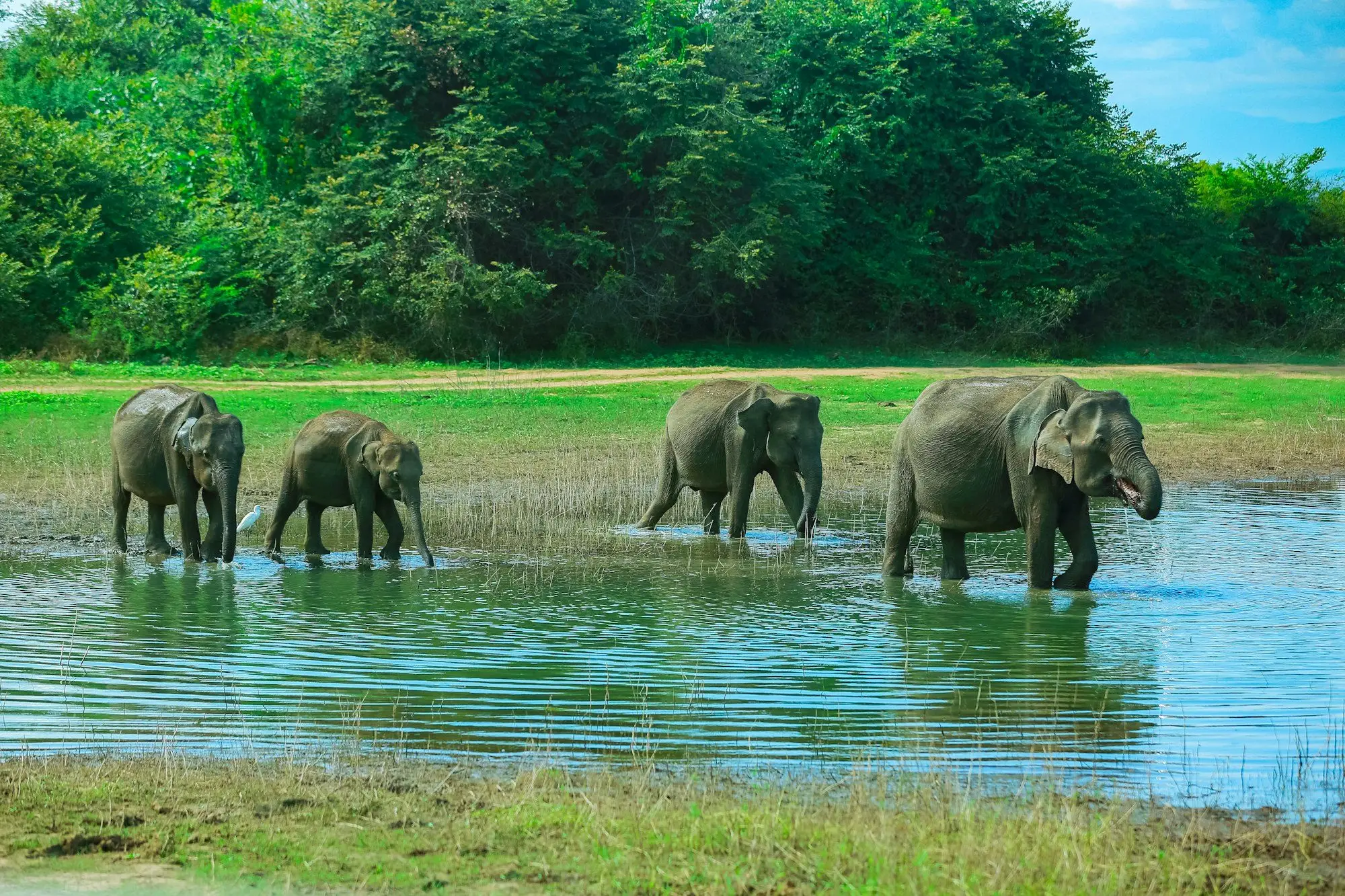
Udawalawe National Park Guide: Elephants, Fees & Tips
Plan an Udawalawe safari: elephant herds, morning vs afternoon drives, entrance fees, the Elephant Transit Home and easy trips from Ella or Mirissa.