Where to See Wild Elephants in Sri Lanka, Month by Month
Minneriya or Udawalawe? Where wild elephants are easiest to see each month, with honest notes on crowds, costs, drive times and what to skip.


Quick facts
- Any month
- Udawalawe
- July–November
- Minneriya, then Kaudulla
- December–April
- Udawalawe and Yala; Hurulu in the north
- Wild elephants
- About 7,500 (2024 survey)
- Tuskers
- Fewer than 1 bull in 10
- Skip
- Rides, bathing and roadside feeding
On this page
- Quick answer: where to see elephants this month
- Month by month: where the herds are
- Minneriya, Kaudulla and Hurulu: the Gathering and its neighbours
- Udawalawe: elephants in any month
- Yala and the quiet south
- The east, and Wasgamuwa
- Elephants by the road: why you should never feed them
- Pinnawala, rides and bathing: what to know before you book
- How to watch elephants well
- Elephants with children
- What it costs
Sri Lanka has about 7,500 wild elephants, according to the 2024 national survey: more for its size than any other country in Asia. People share most of their range, which is why elephants turn up by roads and farms as well as in the parks. So if you'd like to see them in the wild, the questions are where, and in which month.
The short answer is Udawalawe in any month and Minneriya from July to October. The longer one depends on where you're staying, how you feel about crowds and whether you'd like a leopard with your elephants. We run safaris in four parks, Yala, Udawalawe, Wilpattu and Minneriya, and our Minneriya safari goes to Kaudulla or Hurulu Eco Park next door, with your OK, when that's where the herds are. We don't run the other places on this page, and we'll tell you when one of them is the better choice anyway.
Quick answer: where to see elephants this month
- Any month: Udawalawe. Family herds with calves turn up on almost every drive, and the Elephant Transit Home is 15 minutes from the gate.
- July to October: Minneriya, for the Gathering of big herds on its drying reservoir, at its best in August and September. Kaudulla, next door, usually takes over from about September to November.
- November to April: Udawalawe and Yala in the south. In the north, Kaudulla can still be good in November; after that the big reservoirs are full and the herds spread out, often around Hurulu Eco Park near Habarana.
- The east coast, about May to September: Lahugala's old tanks near Arugam Bay, best in July and August, and the boat safaris at Gal Oya.
- Elephants and a leopard: Yala, where elephants are likely too, but its main blocks close for a few weeks in most Septembers and Octobers.
Month by month: where the herds are
The table shows the five places most travellers choose between, month by month; the parks in the east come further down. It's our reading of the research and of what drivers report, not an official calendar: sources disagree by a month or so at either end, and every year's rain moves things.
How to read it: ●● best, ● good, ○ patchy (smaller or more scattered herds), ✕ closed for part of the month in most years. Yala means Block 1, where most safaris go.
| Month | Minneriya | Kaudulla | Hurulu | Udawalawe | Yala |
|---|---|---|---|---|---|
| January | Patchy | Patchy | Good | Best | Good |
| February | Patchy | Patchy | Good | Best | Good |
| March | Patchy | Patchy | Good | Best | Good |
| April | Patchy | Patchy | Good | Best | Good |
| May | Patchy | Patchy | Patchy | Best | Good |
| June | Patchy | Patchy | Patchy | Best | Good |
| July | Good | Patchy | Patchy | Best | Good |
| August | Best | Good | Patchy | Best | Good |
| September | Best | Best | Patchy | Best | Often shut |
| October | Good | Best | Patchy | Best | Often shut |
| November | Patchy | Good | Good | Best | Good |
| December | Patchy | Patchy | Good | Best | Good |
Wilpattu isn't in the table because it's our leopard park: elephants are possible there for most of the year, but they're not the reason to go.
Minneriya, Kaudulla and Hurulu: the Gathering and its neighbours
Three neighbouring parks near Habarana, in the Cultural Triangle, share one elephant range, and between them they hold Sri Lanka's biggest elephant spectacle. We run safaris here, and we follow the herds between all three.
When the Gathering happens, and why it can fail
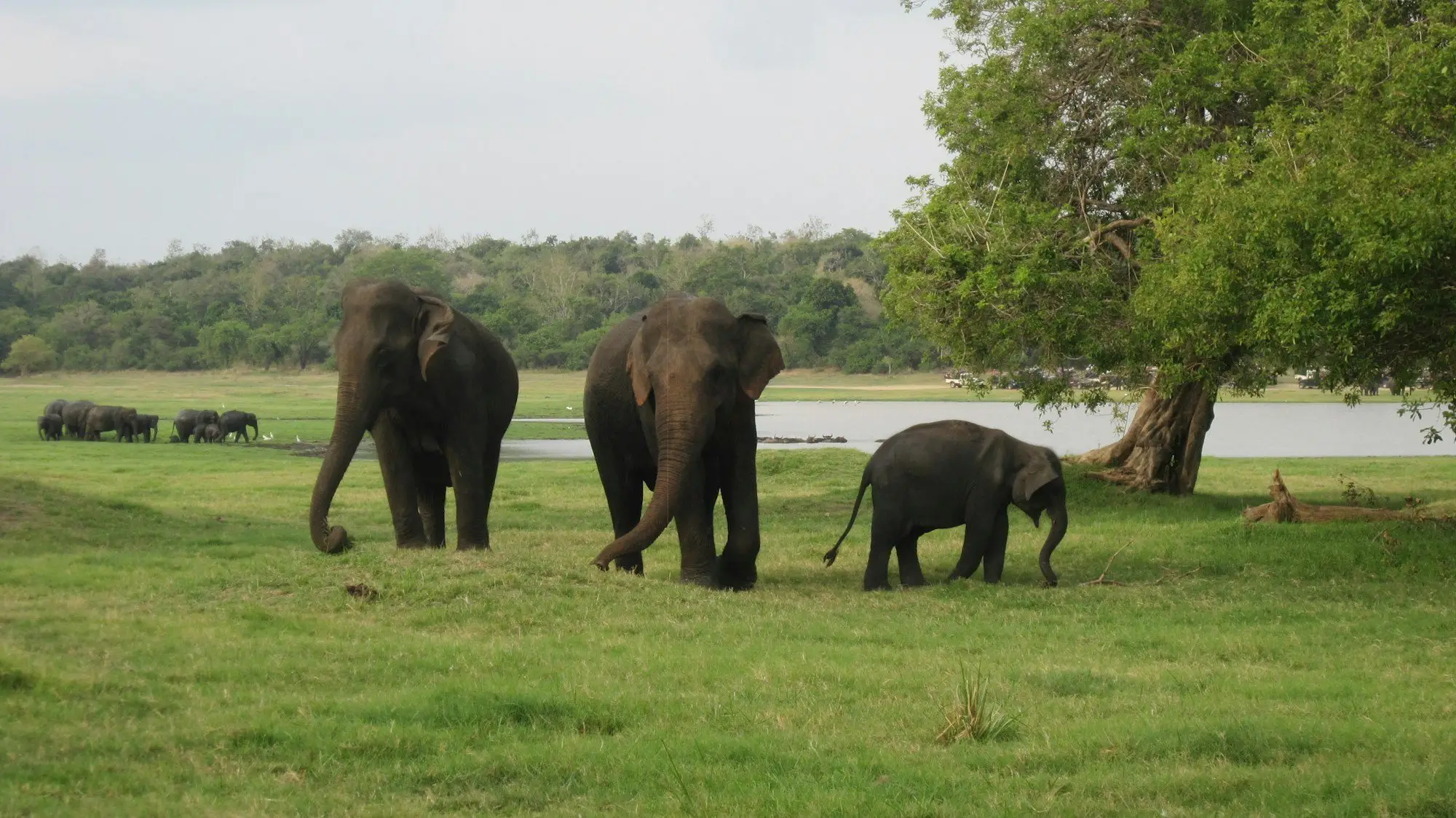
Minneriya National Park is built around a reservoir made for King Mahasena in the third century AD. As the dry season draws the water down, fresh grass grows on the exposed bed, and from about July the herds walk out of the forest to graze, peaking in August and September. In good years hundreds gather at once, with calves everywhere and bulls moving between the family groups. Sri Lanka's elephants don't migrate long distances: these herds simply move between the reservoirs and forests around them, wherever the grass is best.
It can fail. After 2018, water from the new Moragahakanda reservoir upstream kept Minneriya's tank high through the dry season, and the grass stayed flooded. Counts by a former head of the wildlife department fell from 402 elephants on one day in September 2017 to about 20 a day in September 2021. In 2025 the irrigation authorities undertook in court to keep the reservoir's natural rise and fall, and recent seasons have brought big herds again, though nobody has published a count for 2026. Nobody can promise you the Gathering, or a number of elephants.
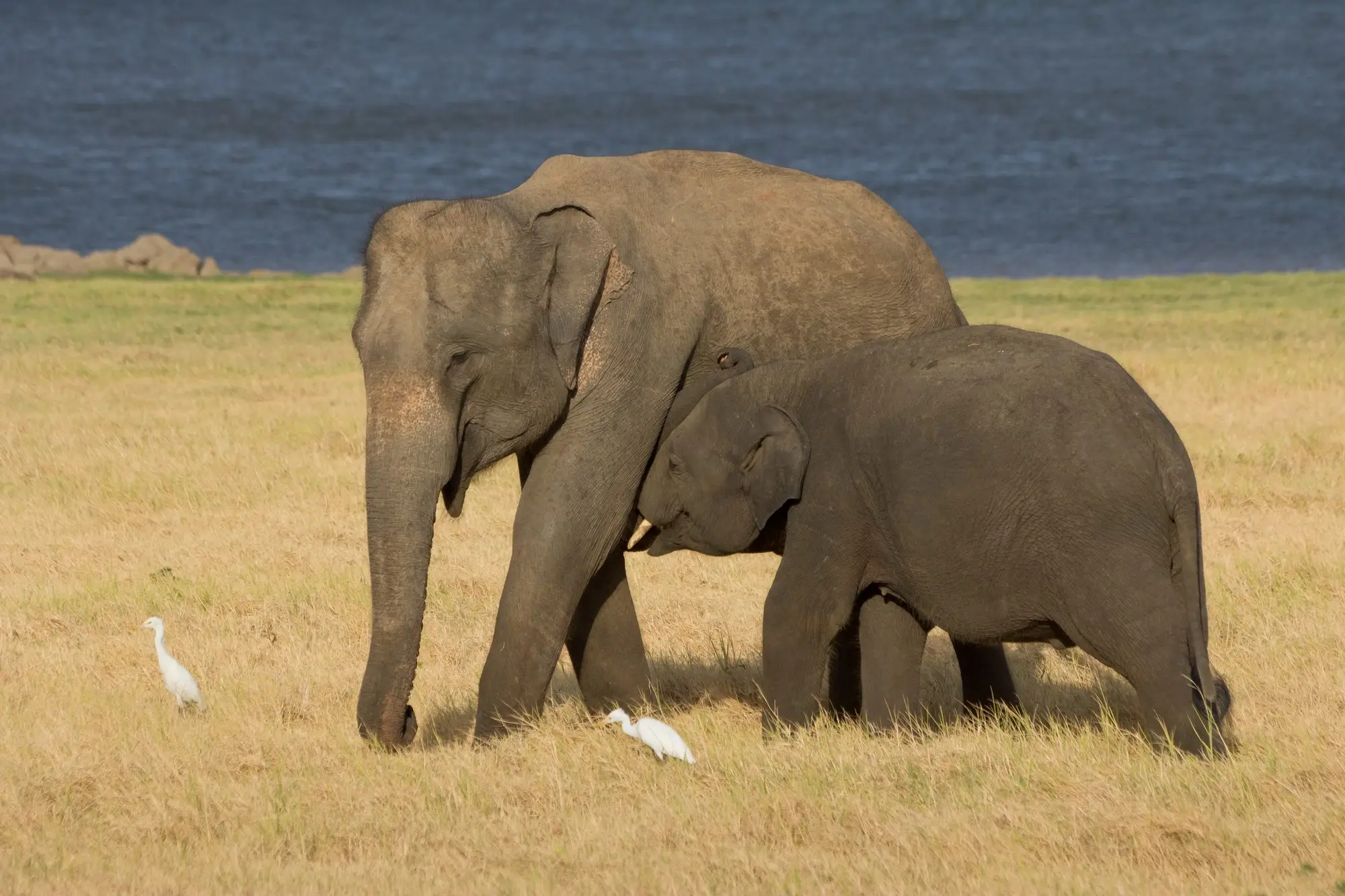
Minneriya in season: a calf suckling beside its mother on the grass, with cattle egrets around them.
The other catch is crowds. In August 2026 officials put the traffic into Minneriya and Kaudulla at 400 to 600 jeeps a day, and the ticket queue could take up to two hours. You'll still want the afternoon, when the herds walk out onto the grass, so pick a driver who keeps back, and be ready to go to Kaudulla, which is often a little quieter.
Driving to Minneriya: Main entrance (A11, Habarana–Polonnaruwa road)
| From | Drive | Morning pickup | Afternoon pickup |
|---|---|---|---|
| Sigiriya | 45 min · 20 km | 05:00 | 13:15 |
| Kandy | 2 h 30 · 103 km | 03:15 | 10:45 |
| Trincomalee | 2 h 15 · 94 km | 03:30 | 11:45 |
| Colombo | 4 h 15 · 181 km | too early | 09:00 |
Door-to-gate times with normal traffic, rounded to 15 minutes. Tap a town to plan from there.
The gate is about 15 minutes from Habarana and 30 to 45 from Sigiriya or Dambulla, and if you're staying in one of those towns, our jeep collects you from your hotel. Our Minneriya guide has the full story.
Minneriya or Kaudulla?
Kaudulla, Minneriya's neighbour to the north, is built around another of King Mahasena's reservoirs and linked to Minneriya by a protected forest corridor. Its tank usually runs about a month behind Minneriya's, so the herds often cross over once Minneriya starts to refill, and Kaudulla is usually at its best from about September to November. It's often a little quieter, it charges the same tickets, and it's the closest of the three to Trincomalee, about 1¾ hours away.
In practice the right answer is whichever park the herds are using that week. So the evening before your safari, we check with the jeep drivers, message you our pick, and you choose.
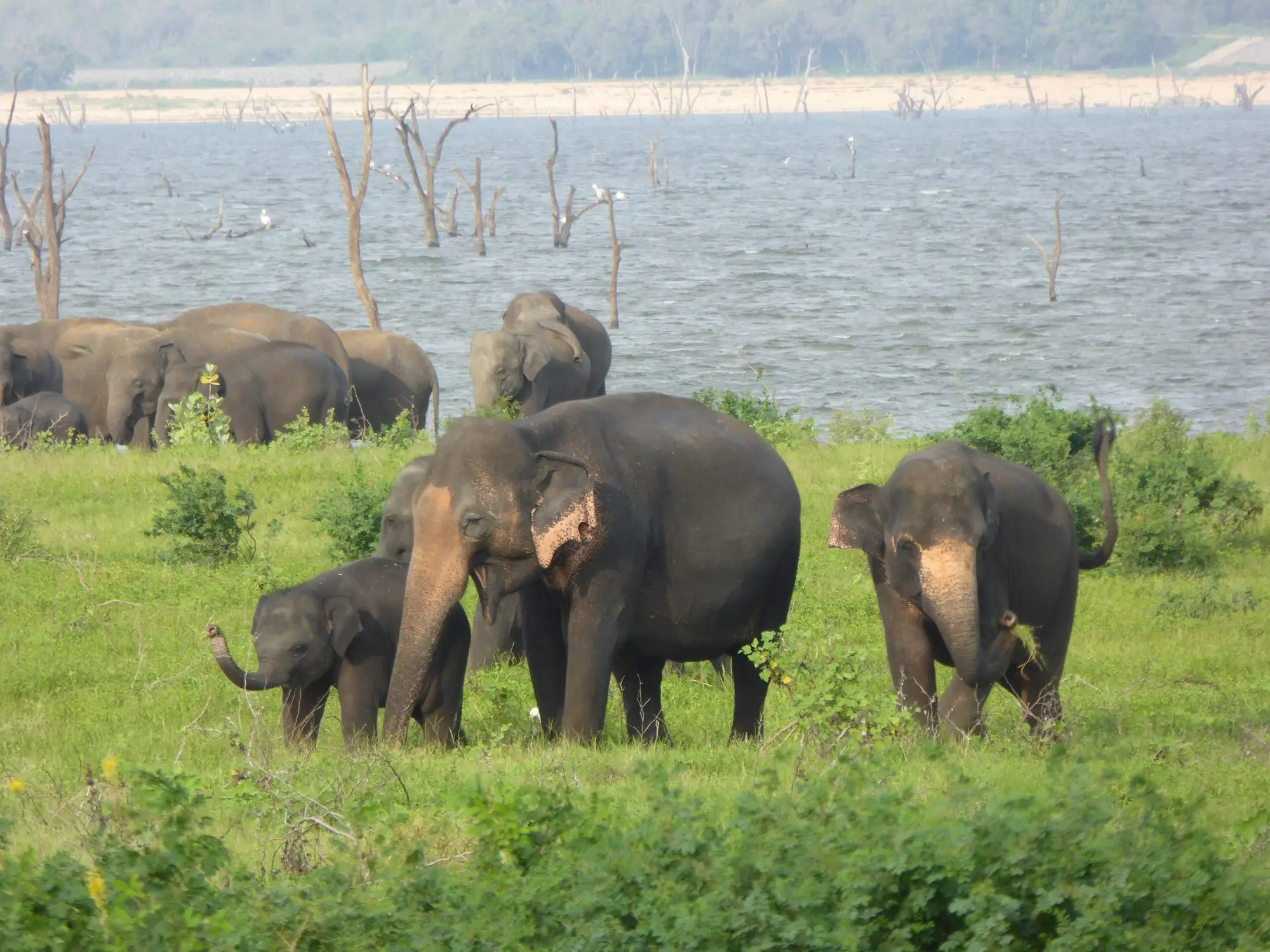
An elephant family by Kaudulla's reservoir and its drowned trees.
Hurulu: the quiet fallback, and the cheapest
Hurulu Eco Park, just outside Habarana, is forest and grassland rather than a reservoir bed, and it's run by the Forest Department, not the wildlife department. It comes into its own when the big tanks are full, roughly November to April, and on days when the other two are flooded or jammed. Its tickets cost about a fifth of the national-park price for two adults. The forest is thicker, so you'll often watch elephants between the trees rather than across open grass, and it keeps shorter hours.
Some sellers switch to Hurulu without telling their guests, or charge Minneriya prices for it. Whoever you book with, make sure you're told which park you're going to, and that you pay Hurulu's price if that's where you go.
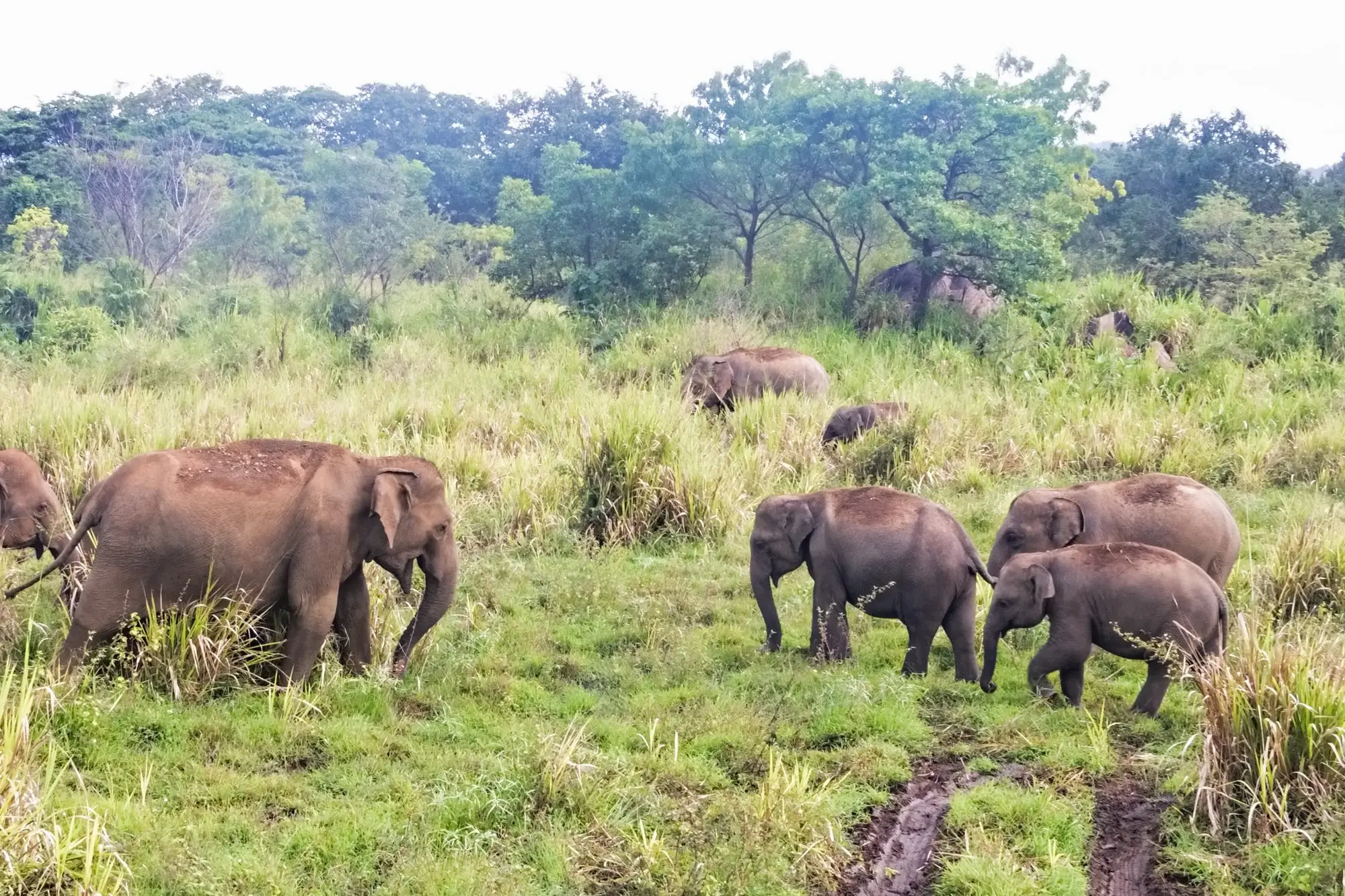
A herd with calves in the grassland of Hurulu Eco Park, just outside Habarana.
Udawalawe: elephants in any month
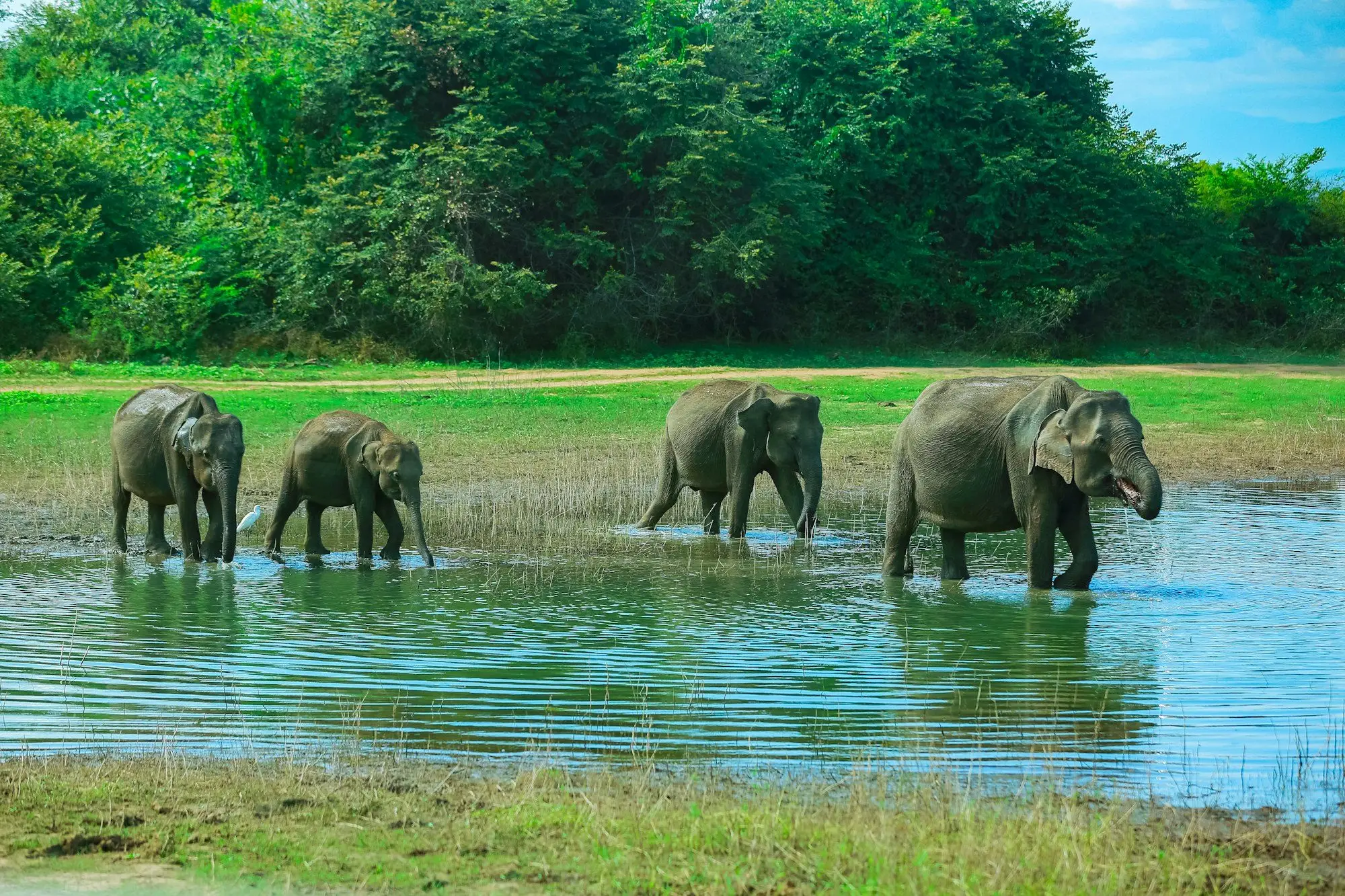
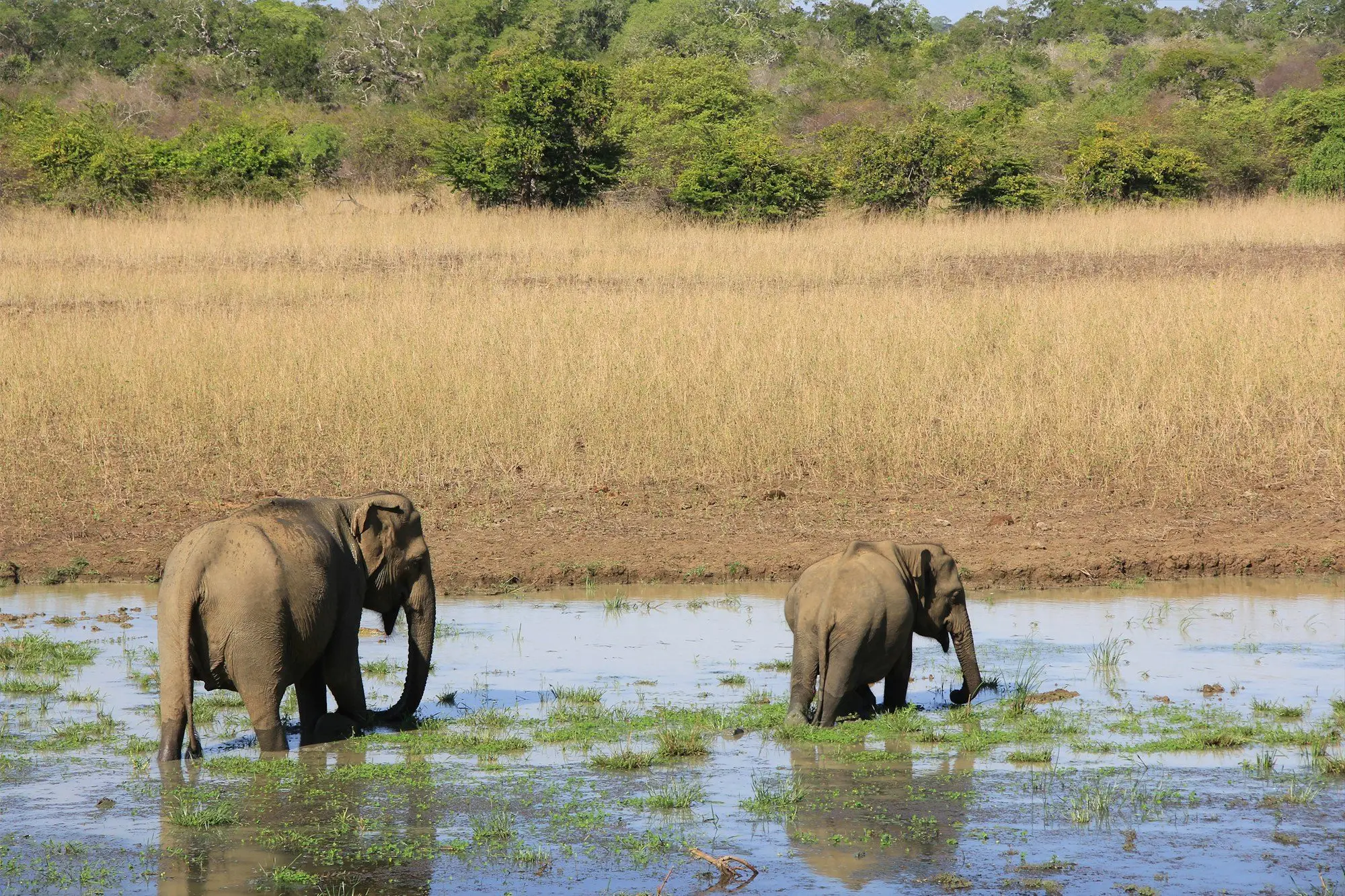
If you want wild elephants with as little left to chance as possible, go to Udawalawe. Much of the park is open grassland around a big reservoir, so there's little for an elephant to hide behind, and family herds with calves turn up on almost every drive, in any month. We run safaris here, usually as a stop between Ella and the south coast.
Hundreds of elephants use the park. One long-term study identified more than 500 adults by sight and estimated that about 800 to 1,160 elephants use it in all. Many come and go with the seasons, but there are herds here in every month. The groups you meet on a given day are usually small families, and the open country lets you watch them properly, often close, instead of glimpsing grey shapes in the bush.
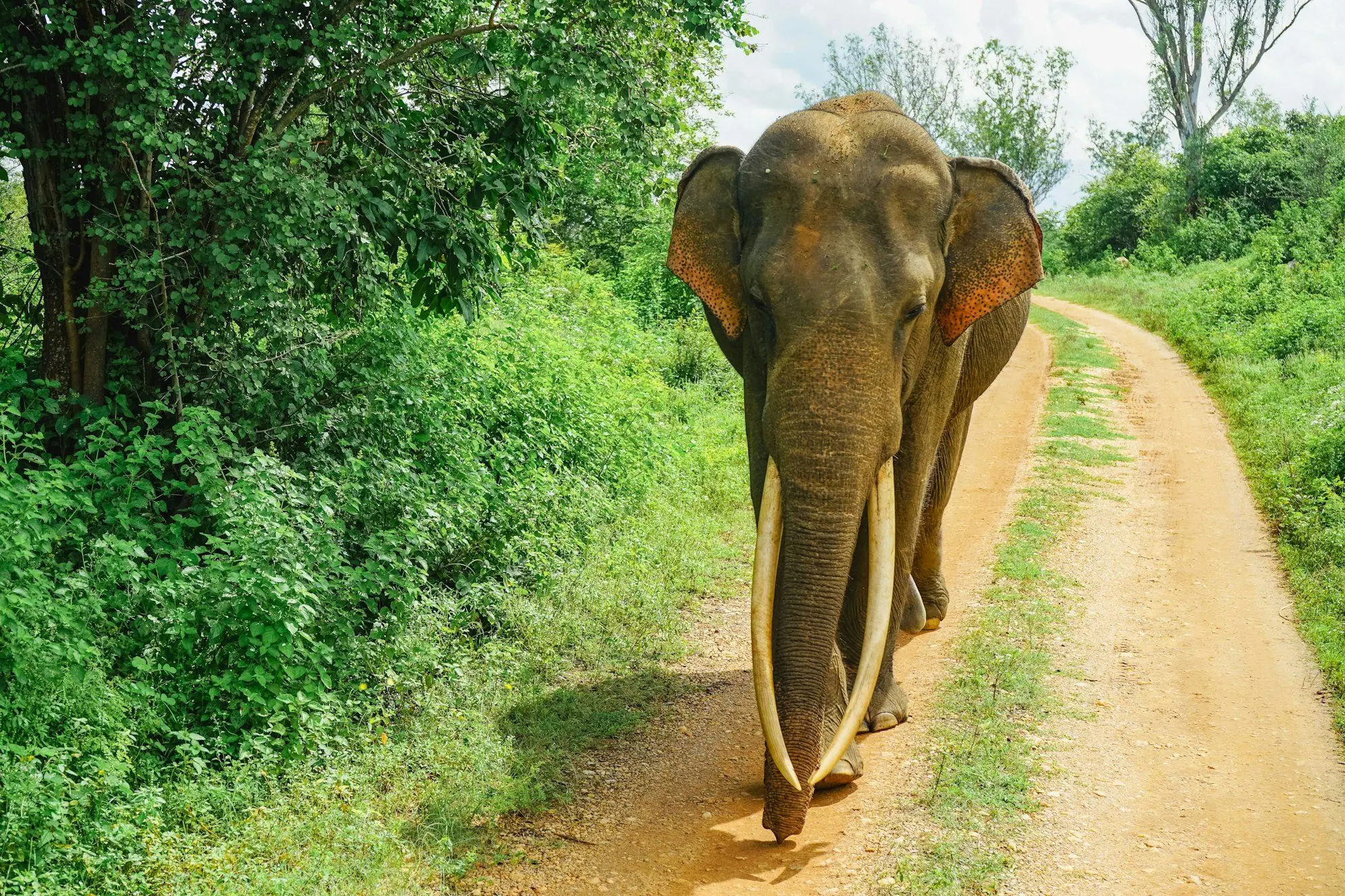
A tusker in Udawalawe, where fewer than one adult bull in fifty has tusks.
Driving to Udawalawe: Main entrance (B427, Thanamalwila road)
| From | Drive | Morning pickup | Afternoon pickup |
|---|---|---|---|
| Ella | 2 h 15 · 91 km | 03:30 | 11:30 |
| Mirissa | 2 h · 108 km | 03:45 | 11:45 |
| Galle | 2 h 15 · 132 km | 03:30 | 11:30 |
| Colombo | 4 h · 160 km | too early | 09:00 |
Door-to-gate times with normal traffic, rounded to 15 minutes. Tap a town to plan from there.
Minneriya or Udawalawe?
- Choose Minneriya for the spectacle: big herds together in one open place, from July to October, ideally in August or September. Expect plenty of other jeeps, and go in the afternoon.
- Choose Udawalawe for reliability: family herds on almost every drive, in any month, with the jeeps spread across open plains and the Elephant Transit Home nearby. It's also the one that fits a route through Ella and the south coast.
Travelling the whole island in August or September? Do both. They're very different days.
The Elephant Transit Home
The Elephant Transit Home, in Udawalawe town about 9 km from the park's main gate, is run by the wildlife department to raise orphaned calves and release them into protected areas once they can look after themselves. Since it opened in 1995, more than 180 had gone back to the wild by 2025. Visitors watch the feeds from a covered stand, with no touching and no riding, and it's the kinder way to see young elephants. Feeds are usually at about 10:30, 14:30 and 18:00, but times change; our guide to the Transit Home's feeding times and ticket prices has the details, and an honest word on welfare.
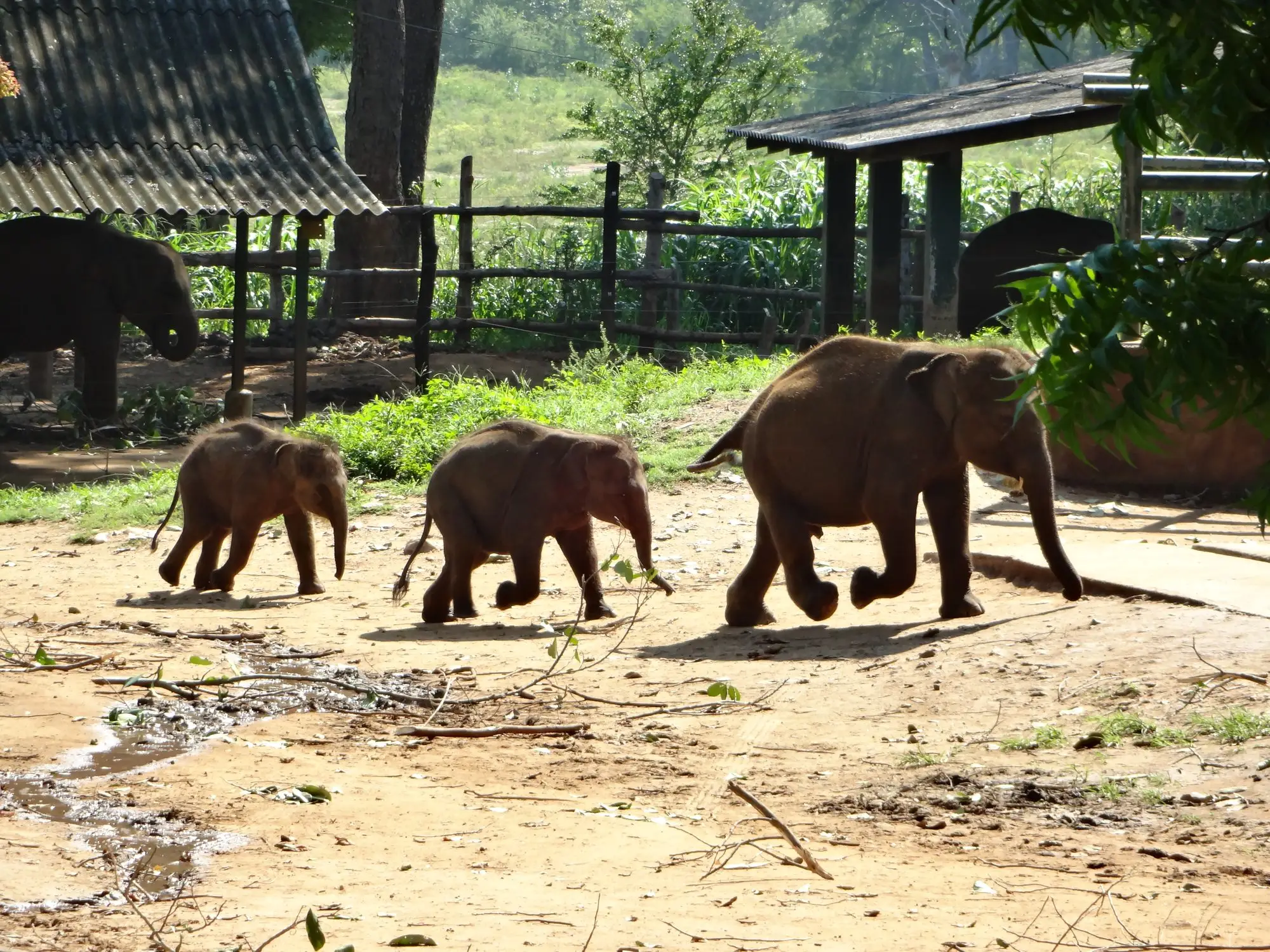
Orphaned calves at the Elephant Transit Home, which raises them to be released into protected areas.
Yala and the quiet south
Yala is Sri Lanka's leopard park, but elephants are likely on a drive too, often a family group at a waterhole. We run safaris in Block 1, where most visitors go. The catches are the crowds, with hundreds of jeeps a session at busy times, and the closure of Blocks 1 and 2 for a few weeks in most Septembers and Octobers (in 2026, from 14 September to 15 October). Our Yala guide covers both.
Next door are two quieter options. Block 5, entered at Galge on the Buttala–Kataragama road, has elephants around the Weheragala reservoir, sees only a handful of jeeps on most days and stayed open during the 2026 closure. Our planner doesn't price it, so it's one to ask us about. Lunugamvehera National Park, near Thanamalwila, was declared in 1995 partly as an elephant corridor between Yala and Udawalawe, and it sees very little traffic. We don't run safaris there.
The east, and Wasgamuwa
If your trip includes Arugam Bay or the east coast, three parks are worth knowing, and there's a fourth inland. We don't run any of them.
- Gal Oya, about two hours inland from Arugam Bay, is a park where the safari goes by boat, on the Senanayake Samudraya, Sri Lanka's largest reservoir. Elephants on the shore are likely, and in some months, most often reported from March to July, they swim between the islands. That's possible rather than likely, and nobody can promise it. Avoid November to January, when the north-east monsoon brings the rain.
- Lahugala Kitulana, 30 to 45 minutes from Arugam Bay, is a small park of old tanks where herds gather in the driest months, especially July and August. Most people watch from the main road near the tanks in the late afternoon. Stay in the vehicle, keep your distance, and drive slowly after dark.
- Kumana, about an hour south of Arugam Bay, is wonderful for birds, especially from April to July, when thousands of water birds nest there. Elephants and leopards live there too, but it's a bird park first.
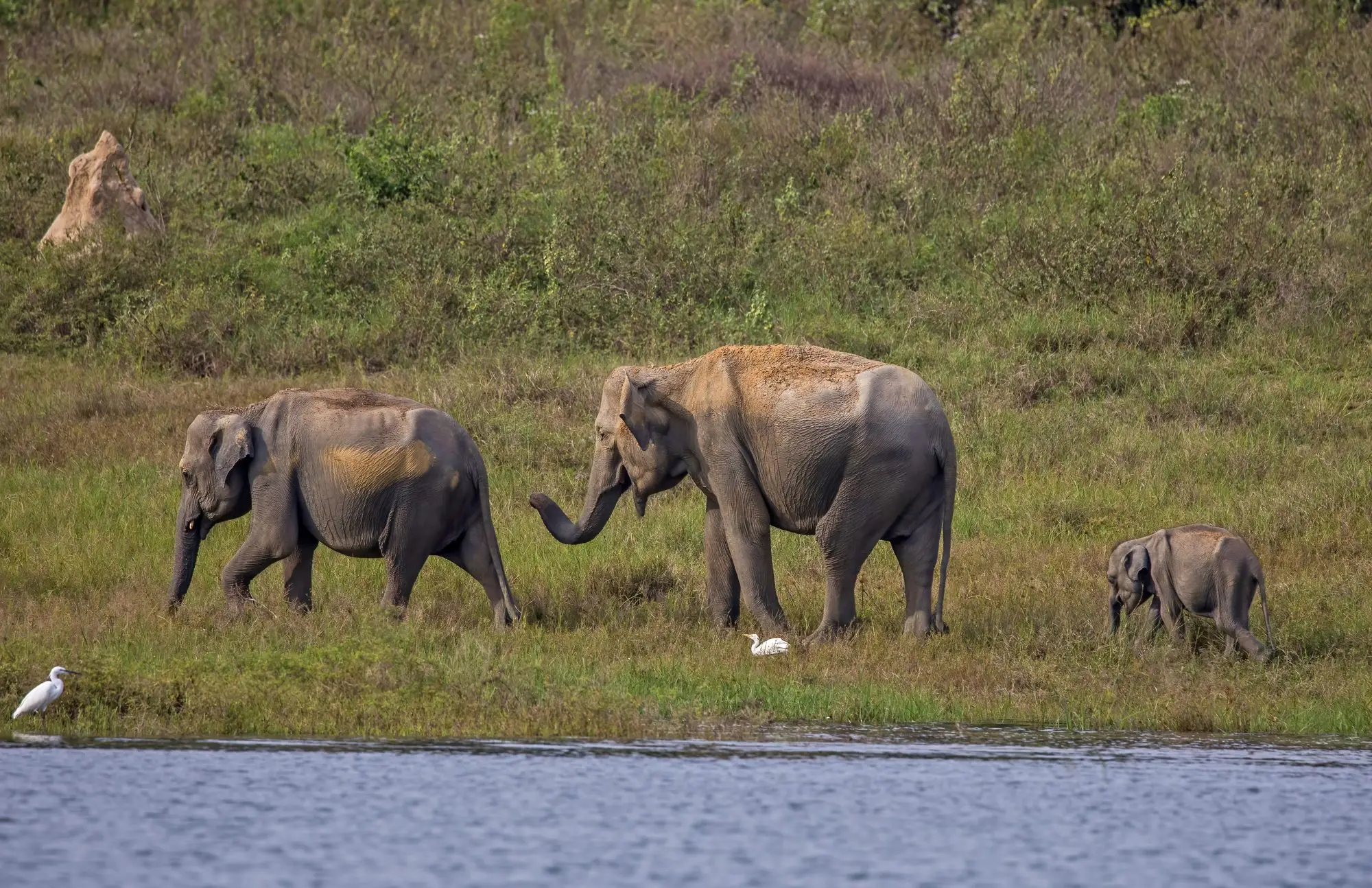
An elephant family on the shore of Gal Oya's reservoir, seen from the water.
Inland, Wasgamuwa, a little over two hours from Sigiriya, is the quiet choice. Sri Lanka Tourism says its large herds are best seen from November to May, but it's remote, with rough roads and very few visitors.
Elephants by the road: why you should never feed them
Some of the elephants you'll see are by the road, not in a park, and a few have learnt that cars mean food. It looks charming. It isn't.
- Udawalawe's boundary fence. Between 2007 and 2024, researchers counted 66 bulls begging for food at the electric fence along the Thanamalwila road, and at least three elephants and one person died near it.
- The Kataragama–Buttala road. In September 2026 the wildlife department said about eight elephants there had learnt to stop vehicles and search them for food, and that five people had died in attacks on vehicles in six years. It said its officers would film anyone who stops to feed them, and take legal action.
- Around Habarana, Dambulla and Polonnaruwa, the roads cross the forest corridor around Minneriya, and feeding from cars is common.
What to do:
- Never feed an elephant, and never get out of the vehicle. The wildlife department says both are illegal.
- Give elephants right of way, and let them cross at their own pace.
- Don't stop close, linger or hoot. If an elephant walks towards you, your driver should back away slowly, not race past.
- Slow down after dark, when elephants cross these roads.
- A begging elephant is a hazard, not a photo stop. If a driver offers to stop and feed one, say no.
Pinnawala, rides and bathing: what to know before you book
Plenty of itineraries include a stop with captive elephants. We'd steer you away from them, and here's why, plainly.
Pinnawala opened in 1975 as an orphanage, and officials now call it the Pinnawala Elephant Conservation Centre. It no longer takes in wild orphans, which have gone to the transit homes for more than a decade, so what you see is a captive herd of about 65 elephants, many born there, walked to the river to bathe twice a day, with paid sessions for visitors to join in. Animal-welfare groups have long criticised how its elephants are kept and handled: Responsible Travel, a holiday company, stopped selling it after a Born Free report found bulls in musth chained with leg wounds. In 2026 it opened an enclosure where bulls in musth are no longer chained, which is a step, but it's still a place that keeps and breeds elephants for people to look at.
Rides are legal and regulated in Sri Lanka, not banned. Rules from 2021 cap a ride at four people and bar pregnant elephants, mothers of young calves, bulls in musth, sick elephants and those over 60. Bathing sessions are sold too. World Animal Protection says elephants used for either are usually trained with harsh methods, and close contact is stressful for them and risky for you: in 2025 a tourist was killed during an elephant bath in Thailand. Places that call themselves sanctuaries but still offer walks, washing or feeding are better than a ride camp, but they're still close contact.
If you'd like to watch young elephants, go to the Elephant Transit Home at Udawalawe. For the real thing, watch wild elephants from a jeep that keeps its distance. We don't sell rides or bathing sessions.
The Kandy Perahera's elephants
Every July or August, Kandy's Esala Perahera fills the streets for ten nights with drummers, dancers and dozens of decorated elephants, in honour of the Sacred Tooth Relic, with a replica of its casket carried by the temple's tusker. It's a living religious tradition, not a show put on for visitors. The elephants' welfare is debated in Sri Lanka itself: in 2019 Tikiri, a frail 70-year-old elephant, was withdrawn after photos of her drew outrage, and she died weeks later. Rules from 2021 keep elephants over 60 out of processions unless a vet approves, and in August 2026 the government set up a committee to review how captive elephants are licensed and used at religious events. If you're there, watch respectfully, and don't treat the elephants as photo props.
How to watch elephants well
Most of this is common sense, and a good driver does it without being asked.
- Keep your distance and let the elephant choose. We know of no official Sri Lankan distance; Thailand's park authority advises at least 30 metres in a vehicle, which is a sensible minimum.
- Engine off at a calm herd, so it carries on as normal, but be ready to move off if a bull or an agitated elephant comes towards you.
- Never come between a mother and her calf, block a herd's path or box it in with other jeeps.
- No flash, no shouting, and phones on silent.
- Give bulls in musth extra room. Look for a dark stain running down the cheek from the temple. They can be unpredictable.
Reading an elephant's mood
Ears spread wide and stiff, a hard stare, the head held high, a raised or swinging trunk, or a tail held up: that elephant wants you to leave. Back away slowly. Mock charges happen, especially around calves and in crowded sightings. They're a warning, not a game.
If your driver gets too close
- Ask calmly to stop, back off or leave the sighting. You're the customer, and good drivers will be glad to.
- Note the jeep's number and the driver's name.
- Tell the park office on the way out, and whoever booked the jeep.
- For wildlife offences such as feeding or harassment, call the environment ministry's 24-hour hotline, 1995.
If it's one of our jeeps, tell us too. We want to know.
Elephants with children
- Udawalawe is the easy choice: open plains, big animals, usually within minutes, a shorter drive from Ella or the coast than Yala, and the calves at the Elephant Transit Home nearby.
- Minneriya and Kaudulla suit families as afternoon drives, with no pre-dawn start. In August and September, though, the ticket queue and the afternoon heat are hard on small children, so bring water, hats and something to do.
- Tickets: in the national parks, children aged 6 to 12 pay a reduced fee and under-6s go free.
- The real risk is close contact. Keep children in the vehicle, skip roadside "photo stops", and give bathing and feeding experiences a miss.
What it costs
In the four parks we run, and at Kaudulla, foreigners pay the same wildlife department fees: a ticket per person, a charge per jeep and 18% VAT on top. Each gate charges them in rupees at its own rate. Here's Minneriya's table; Kaudulla's prices are the same.
| Adult | US$25 |
|---|---|
| Child (6–12 years) | US$15 |
| Under 6 | Free |
| Per jeep (service + vehicle fee) | about US$11 |
| VAT on top | 18% |
- 1 adult$42
- 2 adults$72
- 2 adults + 1 child$90
- 4 adults$131
Official fees, checked with the wildlife department's fee calculator on 2 November 2026, for one jeep, VAT included. Gates charge them in rupees at their own rate. Wild Ceylon estimates always include park tickets, and we confirm the exact amount before you travel.
Elsewhere it's cheaper:
- Smaller wildlife department parks, such as Wasgamuwa, Gal Oya, Lahugala and Kumana, charge roughly half the adult ticket.
- Hurulu Eco Park, run by the Forest Department, costs about a fifth as much for two adults.
- The Elephant Transit Home is a few dollars per adult.
On top of the tickets you need a jeep and driver, and usually a ride to the gate. Every Wild Ceylon estimate includes the jeep and the park tickets, plus our car whenever you need one, and our safari prices page shows them for every park and session. The safari cost guide covers the rest, including the cheap-price traps.
Good to know
Where is the best place to see wild elephants in Sri Lanka?
Udawalawe for reliability: family herds turn up on almost every drive, in any month. Minneriya for the spectacle of big herds together, usually from July to October, with Kaudulla next door taking over later in the season. Yala has elephants too, but it's mainly the leopard park.
When is the elephant Gathering?
At Minneriya, usually from July to October and at its best in August and September, then often at Kaudulla next door from about September to November. It depends on the reservoirs' water each year: in 2021, when Minneriya's was kept full, only about 20 elephants a day turned up.
Minneriya or Kaudulla?
Whichever the herds are using that week. Minneriya is usually best in August and September and Kaudulla from about September to November. The two parks share the same elephants and charge the same tickets, so a good driver checks where the herds are the evening before. That's what we do, and you choose.
Is Pinnawala ethical?
We'd skip it. Pinnawala no longer takes in wild orphans: it keeps a captive, breeding herd, with paid bathing sessions, and welfare groups have long criticised how its elephants are handled. To see young elephants without riding or touching them, visit the Elephant Transit Home at Udawalawe, which raises orphans for release into the wild.
Can I ride or bathe an elephant in Sri Lanka?
Legally, yes: rides are regulated, not banned. We'd ask you not to. Elephants used for rides and bathing are usually trained harshly, and close contact is stressful for them and risky for you. Watching wild elephants from a jeep is kinder, and far more exciting.
Will I see a tusker?
Probably not. Fewer than one Sri Lankan bull in ten has tusks, a pattern researchers link to centuries of tuskers being captured. In Udawalawe, a long-term study found tusks on just 4 of 241 adult bulls. Count one as a lucky bonus.
How many wild elephants does Sri Lanka have?
About 7,500, according to the national survey in August 2024, up from about 5,900 in 2011. Some conservationists say the counting method is rough, but it's the best figure there is. That's the densest population of Asian elephants in any country.
Turn the drive into a safari day
We pick you up where you're staying, stop at the park and take you on to your next stop. Private car, private jeep, park tickets: one all-in estimate, sent on WhatsApp. No deposit, pay on the day.
Plan my safari dayKeep planning

Minneriya National Park Guide: The Gathering, Fees & Tips
When Minneriya's elephant Gathering happens and why it can fail, Kaudulla and Hurulu next door, crowds, fees and easy trips from Sigiriya, Kandy or Trinco.
Udawalawe National Park Guide: Elephants, Fees & Tips
Plan an Udawalawe safari: elephant herds, morning vs afternoon drives, entrance fees, the Elephant Transit Home and easy trips from Ella or Mirissa.

Best Time for a Safari in Sri Lanka: Month-by-Month Guide
When to visit Yala, Udawalawe, Wilpattu and Minneriya, which months parks close, how the two monsoons shift wildlife, and the best park for each month.